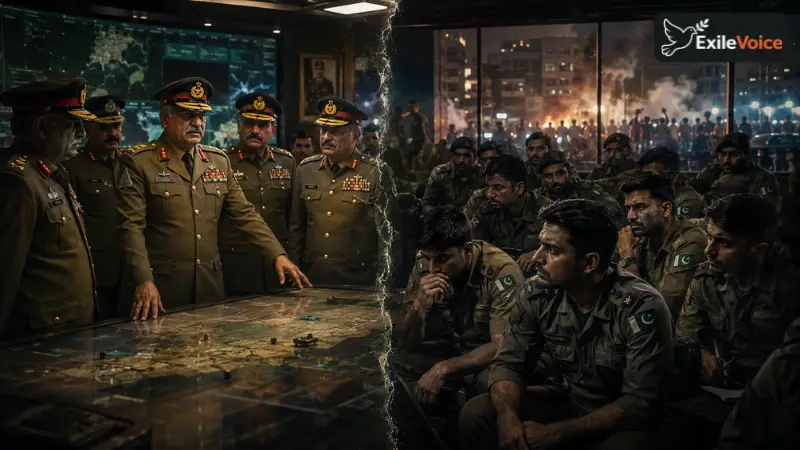
The provocative idea of "Two Armies" within Pakistan does not suggest a literal split or a civil war, but rather a deep-seated ideological and professional tension within the ranks of the country’s most powerful institution. On one hand is the "Top Brass", the high-ranking generals focused on political engineering, regional geopolitics, and maintaining the institutional status quo. On the other is the "Rank and File", the middle-to-lower tier officers and soldiers who are increasingly exposed to the same socio-economic pressures and populist narratives as the general public.
This internal friction is unprecedented. Historically, the Pakistan Army has prided itself on being a monolithic, disciplined entity. However, the rise of digital media and the intense polarization surrounding the PTI has penetrated the "cantonment walls." The analysis suggests that the younger officers, often coming from the same middle-class backgrounds as the PTI’s core supporters, face a "crisis of conscience" when asked to enforce policies that target popular political figures or suppress civilian protests.
The "May 9" events serve as a historical scar in this context. While the leadership views it as an act of mutiny that justifies a hardline crackdown, a significant portion of the public, and potentially elements within the institution, see it as a desperate outburst of a cornered political force. The challenge for the current military leadership is to maintain internal cohesion while managing a public that is increasingly critical of the military's role in governance. The "Two Armies" metaphor highlights the difficulty of leading a professional force in a country where the political and military objectives are increasingly at odds.