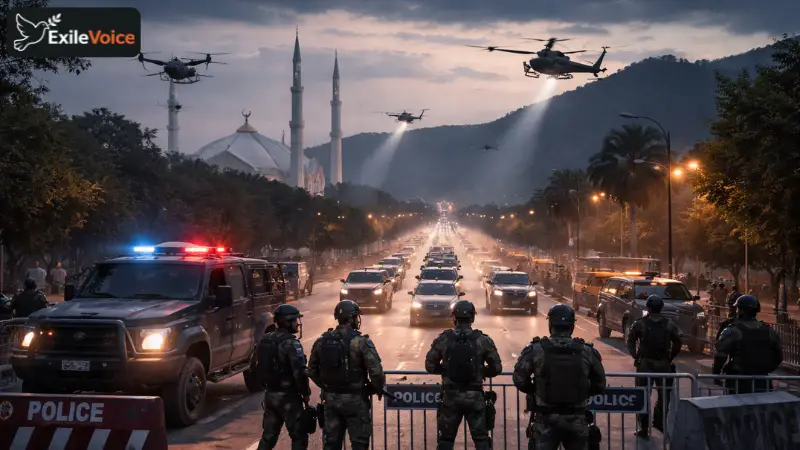
Islamabad is currently under a security lockdown so stringent that it far exceeds the measures taken during previous high-profile US delegations. The closure of hiking trails, hostels, businesses, and even major transport hubs has fueled intense speculation: is Donald Trump planning a surprise visit to the capital? While official reports suggest that representatives like Jared Kushner and Steve Witkoff are the primary visitors, the "level of protocol" being implemented points toward something, or someone, more significant.
This heightened security comes at a time when regional tensions are reaching a boiling point. Sources from Washington D.C. and reports from Al Jazeera suggest that Iran is increasingly wary of the "back and forth" diplomacy exhibited by Western powers. There is a growing concern in Tehran that they are being "deceived" while a larger military confrontation is being prepared in the background. This sentiment is echoed by Russian news agencies, which have reportedly warned Iran of a potential large-scale coordinated strike by US and Israeli forces.
In this context, a visit by high-level US figures, whether it be JD Vance or Trump himself, is not merely about bilateral ties; it is about signaling. If the Iranian President is also expected in the region, the synchronized presence of US leadership would suggest a critical juncture in Middle Eastern and South Asian security. While many analysts predict that a full-scale war is unlikely and that "minor skirmishes" followed by eventual negotiations are more probable, the current atmosphere in Islamabad suggests that the stakeholders are preparing for every possible outcome. The lockdown of the capital is a physical manifestation of a region on edge.