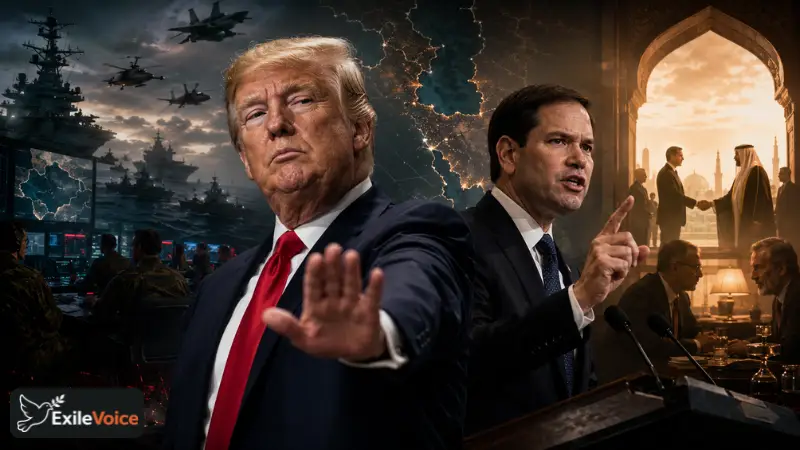
A significant rift has appeared within the highest echelons of the U.S. State Department and the White House. Recent events have highlighted a stark contrast between Secretary of State Marco Rubio’s "hardline" stance and President Donald Trump’s penchant for sudden, pragmatic shifts in policy. This disconnect was laid bare when Rubio held a high-profile press conference asserting the continuation of aggressive military operations, only to be contradicted hours later by a Trump announcement halting "Project Freedom."
The New York Times has noted that Trump’s "U-turn" on Iran has left Rubio "out of sync" with the administration's actual trajectory. While Rubio relies on traditional "hawkish" rhetoric, justifying pre-emptive strikes on Iran as a means to prevent an attack on Israel, Trump has demonstrated a willingness to bypass his own cabinet to engage with regional mediators like Pakistan and Saudi Arabia.
This internal friction is not merely a matter of personality but represents two different philosophies of power. Rubio’s approach is rooted in military dominance and "Operation Project Freedom," which aimed to use Apache helicopters and destroyers to escort ships in a "Rambo-style" display of force. Conversely, Trump appears to be listening to the "common-sense" warnings of the Pakistani and Saudi leadership, who have cautioned that such bravado could ignite a global depression.
The irony of this situation is not lost on political observers. While the U.S. military remains "ready and standing by" with multiple aircraft carriers and destroyers surrounding Iran, the Commander-in-Chief is actively pursuing a deal that would render that military might unnecessary. This disconnect creates a dangerous vacuum of communication, where allies and enemies alike must guess which "version" of American foreign policy will prevail on any given day.