

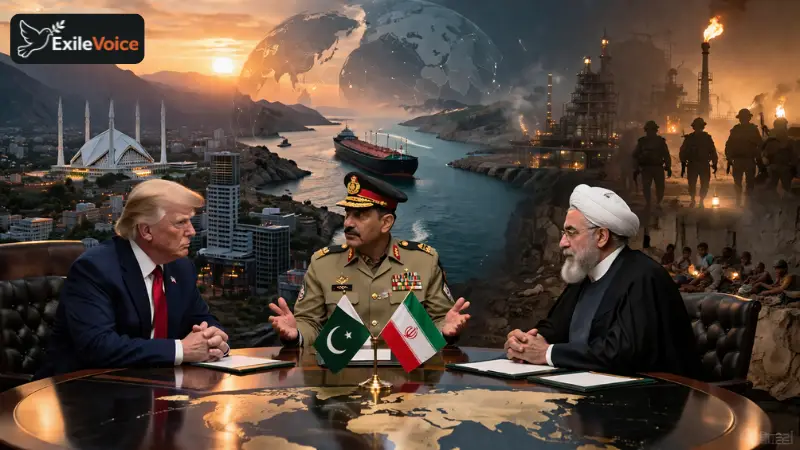
The geopolitical landscape of the Middle East and South Asia is witnessing a seismic shift as Washington signals a renewed reliance on Islamabad to bridge the divide with Tehran. Recent reports suggest that Donald Trump may be considering a historic visit to Islamabad, a move driven by a complex interplay of domestic political necessity and international crisis management.
At the heart of this diplomatic maneuver is the ongoing conflict in the Middle East, which has seen the closure of the Strait of Hormuz and a subsequent spike in global oil prices. These economic tremors have resonated deeply within the United States, impacting President Trump’s popularity. To restore his standing, the administration is reportedly seeking a "grand bargain" that can be presented as a major foreign policy victory.
Pakistan has emerged as the primary interlocutor in this process. General Asim Munir’s recent visit to Iran is being viewed by international observers not merely as a bilateral engagement, but as a mission conducted on behalf of the United States. White House statements have reinforced this narrative, explicitly expressing complete confidence in Pakistan's military leadership to facilitate these sensitive negotiations. This role is further validated by Iranian and international media, which have labeled the Pakistani delegation as carriers of a "special message" from Washington.
The framework for this potential agreement focuses heavily on Iran’s nuclear program. While previous agreements under the Obama administration addressed peaceful nuclear use, the current strategy involves a symbolic "handover" or verification of uranium materials. By centering the narrative on preventing a nuclear-armed Iran, the Trump administration aims to package the deal as a safeguard for global security, specifically protecting Israel and Western interests.
However, this strategic partnership places Pakistan in a delicate position. While the international community lauds Islamabad’s role as a mediator, the domestic reality remains starkly different. The contrast between Pakistan’s status as a global peacemaker and its internal struggles, ranging from an acute energy crisis to economic instability, creates a narrative of "diplomatic prestige versus domestic distress."

