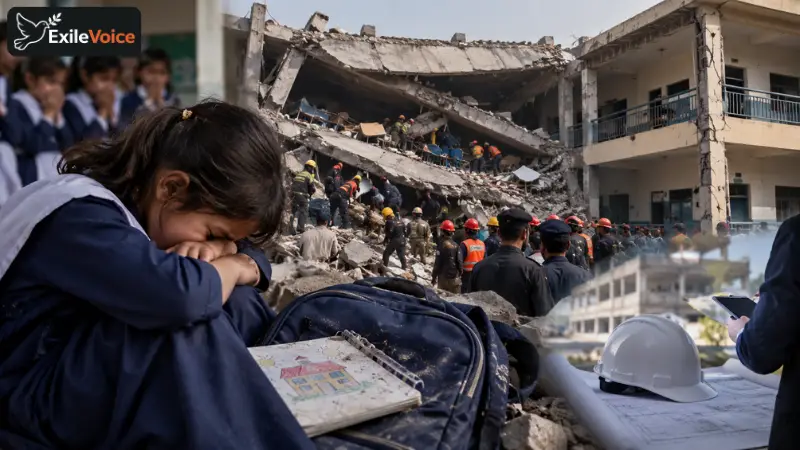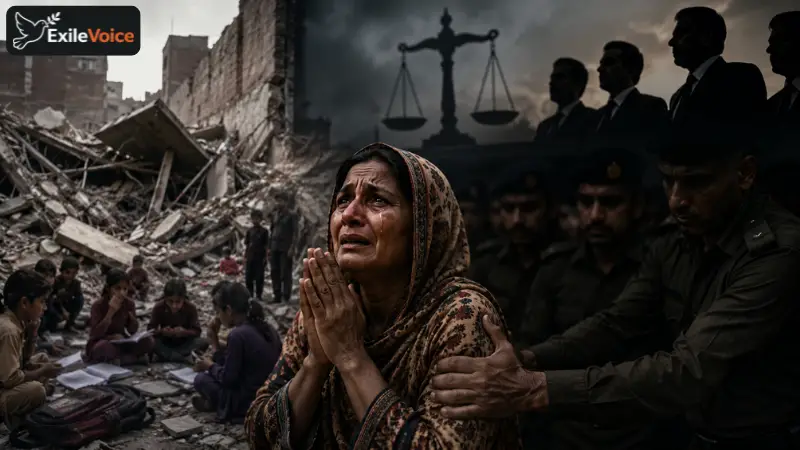
The recent collapse of a roof in Lahore, which tragically claimed the lives of fourteen children attending tuition, has exposed a harrowing reality about the criminalization of poverty in Pakistan. While the loss of these young lives is a national tragedy, the subsequent response by the Punjab government, filing an FIR against the teacher, Hamida Bibi, has drawn widespread condemnation from observers who view it as a gross misdirection of justice.
Hamida Bibi, a woman of modest means, operated a tuition center in her home to supplement her husband’s meager income from fruit vending. With monthly fees ranging from just 200 to 300 rupees per student, her total monthly earnings barely reached eight to nine thousand rupees, a figure that underscores the extreme economic precarity of the household. When the tragedy struck, Hamida Bibi herself was under the roof, suffering injuries alongside her own children. Despite her victimhood and her role as a struggling educator, she has been targeted by the authorities, ostensibly to satisfy the bureaucratic requirement for accountability.
This incident reflects a deeper, systemic pattern where the "maara" (the impoverished) are held to standards that the powerful are never forced to meet. When infrastructure collapses or accidents occur due to the negligence of influential property owners, corporate developers, or political elites, there is rarely a swift move to register criminal charges. However, when a tragedy involves the poor, the state moves with efficient, performative urgency to ensure someone, usually the most vulnerable person involved, bears the brunt of the legal consequences.
The discourse surrounding this event extends beyond the tragic accident itself. It touches upon the broader issue of "criminalizing poverty," where the failure of the state to provide safe educational environments, affordable housing, or social safety nets is ignored, and the blame is instead shifted onto those striving to survive within a broken system. The emotional testimony captured during the reporting, where residents expressed that their greatest crime is their poverty, serves as a poignant indictment of the current social order.
Furthermore, this bias extends to other areas of public administration, such as the perceived lack of accountability for security agencies when they are accused of malpractice compared to the swift punishment meted out to ordinary citizens. The case of the Lahore tuition tragedy is not just a story about a building collapse; it is a manifestation of an institutional culture that consistently prioritizes the appearance of action over genuine justice, leaving the marginalized to navigate the consequences of societal failure alone.