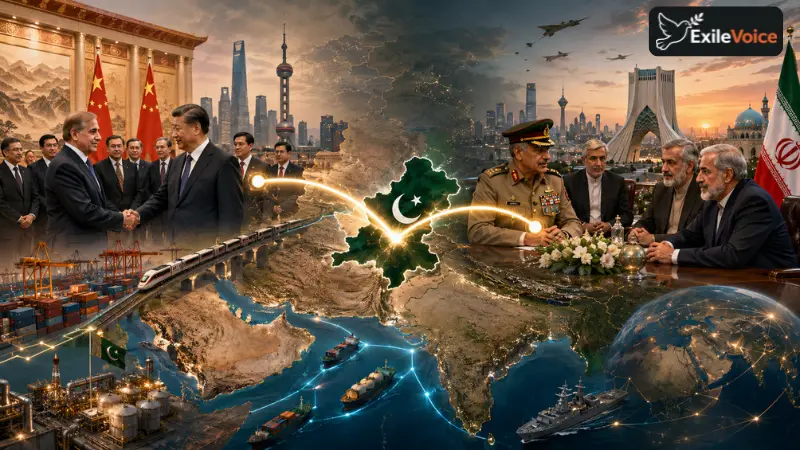
The operational logic of Pakistan's foreign policy is executing a synchronized, two-front civil-military deployment designed to balance contrasting geopolitical alignments. As the Chief of Army Staff manages high-stakes security issues in Tehran, Prime Minister Shehbaz Sharif arrived in Beijing for a multi-day state visit. This simultaneous deployment is not coincidental; it represents a coordinated structural approach by the Pakistani state apparatus. By dividing operational responsibilities, assigning regional security mediation to the military command while engaging the country's primary economic and strategic partner via the civilian government, Islamabad is attempting to secure both its defense requirements and economic stability in a shifting global order.
The timing of the Beijing summit reveals the high priority assigned to Pakistan within China’s current diplomatic calendar. The leadership of the Chinese Communist Party arranged these consultations directly following high-level engagements with major global adversaries and primary strategic allies, positioning Pakistan as a vital partner in its regional architecture. This access underscores a long-term strategic relationship that remains resilient despite Pakistan's domestic economic volatility. For Beijing, maintaining the structural integrity of its corridor to the Arabian Sea through the China-Pakistan Economic Corridor (CPEC) is essential for its long-term energy security and regional trade strategies.
Behind these diplomatic movements lies China's expanding influence in stabilizing Western Asia. The security framework currently being discussed in Tehran contains clear Chinese involvement, as Beijing views regional stability as a direct requirement for its global supply chains. By using Pakistan as an intermediary, China can influence security dynamics in the Persian Gulf without requiring direct military exposure. This strategy aims to secure the primary sea lines of communication running from the Gulf of Oman through the Indian Ocean, ensuring uninterrupted energy flows to China's industrial base while positioning Beijing as a key diplomatic counterweight in the region.
In response to this coordinated diplomatic push, the Iranian state apparatus has adjusted its institutional negotiating structure. Key diplomatic portfolios have been reassigned to veteran regional strategists, signaling Tehran's preparation for detailed institutional negotiations. This organizational shift reflects an understanding that any sustainable regional agreement requires structured mechanisms rather than temporary political assurances. The incoming Iranian negotiating team is focused on securing guarantees for territorial sovereignty and non-interference in internal affairs, particularly regarding long-standing ethnic border friction along its western and eastern frontiers.
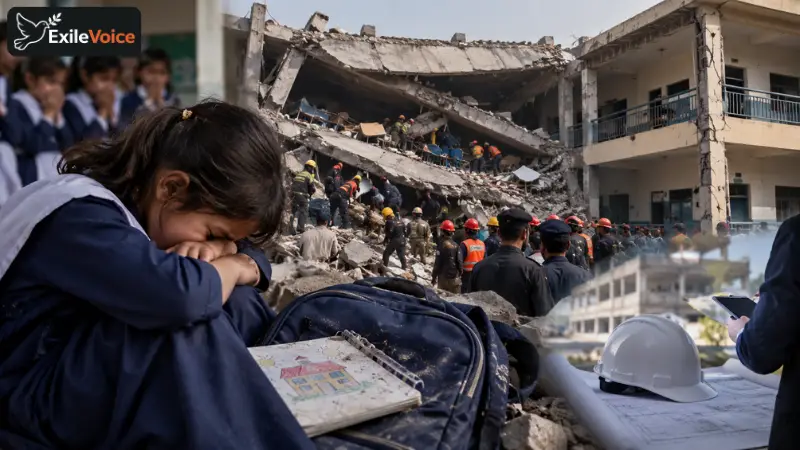
While Islamabad navigates these complex international alignments, its defense infrastructure faces rising institutional challenges from international legal bodies. The United Nations Assistance Mission, alongside specialized human rights rapporteurs, is advancing an investigation into cross-border kinetic operations executed by Pakistani forces. The inquiry centers on a major airstrike conducted against an urban medical facility in Afghanistan, which resulted in significant civilian casualties. Official defense justifications, which cited the presence of hostile asymmetric combatants, are undergoing close international review. This pending United Nations report introduces an element of institutional risk for Pakistan's military leadership, highlighting the tension between conducting aggressive counter-terrorism operations and maintaining compliance with international humanitarian law.
Ultimately, Pakistan’s civil-military leadership is attempting a delicate balancing act in statecraft. Managing deep security ties with Western defense networks, maintaining a strategic economic partnership with Beijing, and participating in sensitive regional mediation requires precise execution. As the geopolitical landscape shifts toward multi-polarity, Islamabad's dual-track diplomacy demonstrates how a mid-tier regional power attempts to leverage its strategic geography to maintain relevance and secure its national interests across competing global power centers.