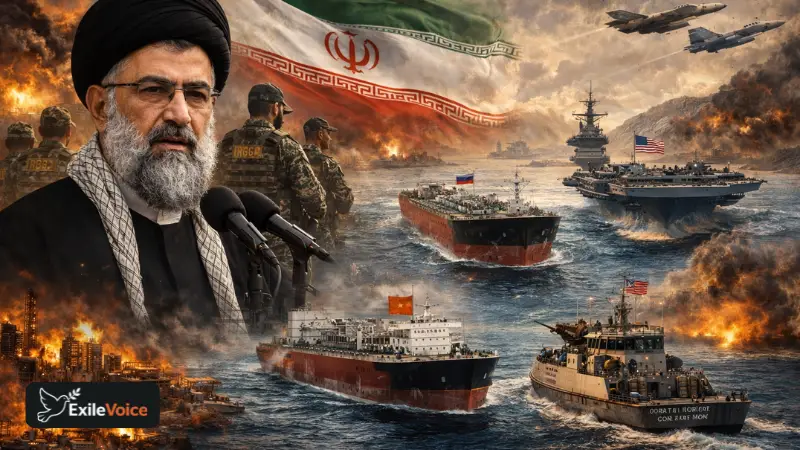
As of mid-March 2026, the global geopolitical landscape has been upended by the strategic maneuvers of Iran's new Supreme Leader, Mojtaba Khamenei. In a significant declaration broadcast across Iranian media, the leadership has effectively seized control of the Strait of Hormuz, transitioning it from a free international waterway to a "regulated" corridor. This development marks a pivotal shift in the ongoing conflict, as Iran leverages its geographical advantage to exert pressure on Western powers and their regional allies.
The current situation in the Persian Gulf is no longer one of total blockade but of selective transit. According to recent reports, Iranian Revolutionary Guard Corps (IRGC) forces are actively monitoring and controlling the flow of traffic. While tankers bound for China, Russia, and even South Asia including India and Bangladesh are being granted passage through a delicate notification mechanism, those associated with the United States, Israel, and Western Europe face a total shutdown. This "controlled" status allows Iran to maintain essential economic ties with its partners while simultaneously strangling the energy supplies of its adversaries.
The economic repercussions are being felt globally. Despite the U.S. government's announcement to release 170 million barrels from its Strategic Petroleum Reserve (SPR) and the International Energy Association’s pledge to release an additional 400 million barrels, oil prices remain stubbornly high. Brent Crude has stabilized above the $100 per barrel mark, a threshold that signifies long-term inflationary pressure on Western economies. The failure of these massive reserve releases to bring down prices suggests that the market has already factored in a prolonged disruption in the Middle East, viewing Iran's control over the Strait as a semi-permanent reality.
Domestically, in countries like Pakistan, the impact is paradoxical. While reports suggest that Pakistan-bound oil has been granted permission to pass through the Strait, the government has recently hiked local petrol prices to record levels, exceeding $5 per gallon. This has sparked intense debate over the justification of such costs if the supply chain remains largely intact. The situation underscores the immense pressure on regional governments to balance their economic survival with the volatile demands of a shifting global order. As the IRGC operates through 31 autonomous units, the reliability of "safe passage" remains a daily concern for international shipping, making the Strait of Hormuz the most volatile maritime chokepoint in the world today.