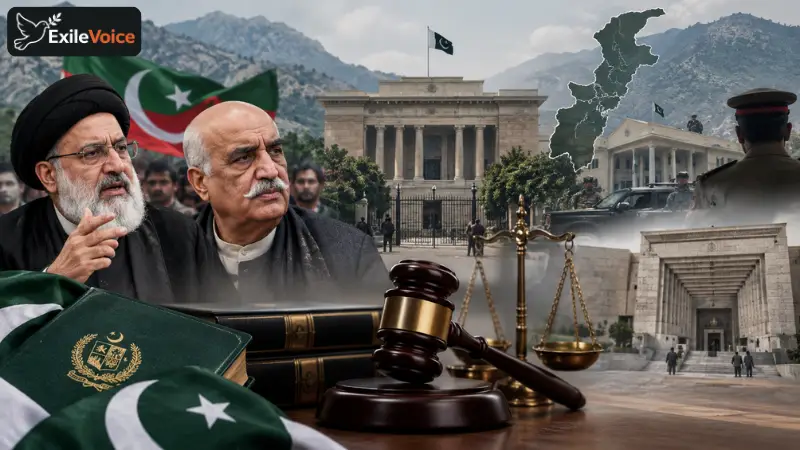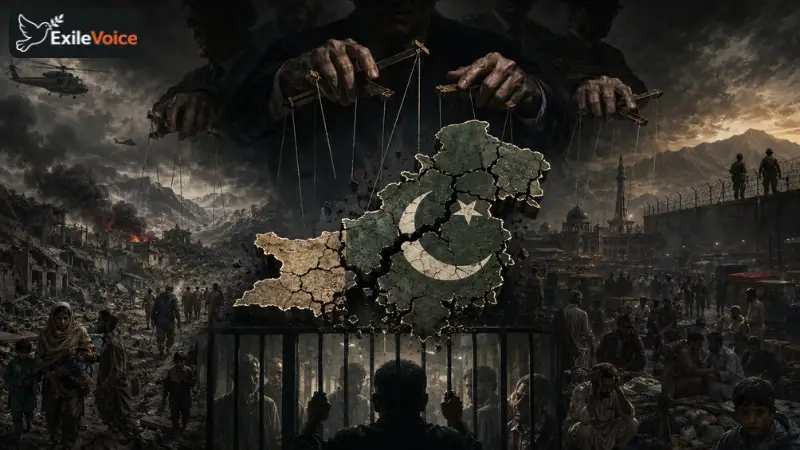
Pakistan’s current socio-political landscape has increasingly become defined by a worrying disconnect between the ruling elite and the grounded realities of the state. This phenomenon, colloquially termed a state of total delusion, manifests in how governance is executed, how political opposition is managed, and how security policies are communicated to the public. When the state mechanism spends more energy manipulating narratives than fixing core structural problems, the gap between official claims and public experience widens dangerously.
A clear example of this disconnect can be found in the ongoing security operations across Khyber Pakhtunkhwa. Amidst a significant resurgence of militancy and terrorism, heavy-handed tactics and aerial bombardments are being utilized in local regions. The state apparatus operates under the assumption that large-scale kinetic force alone can win the hearts and minds of the local population. However, the ground reality tells a different story. The destruction of local infrastructure, collateral damage affecting civilians, and the displacement of families generate deep resentment. Expecting populations to embrace state authority when their homes are caught in the crossfire is a severe miscalculation. Security cannot be sustained through a policy that alienates the very people it claims to protect.
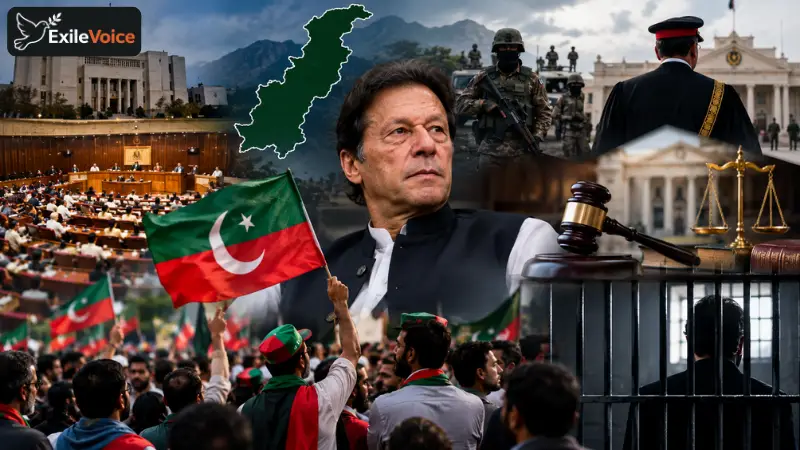
Concurrently, the legal and political targeting of former Prime Minister Imran Khan and his party, the Pakistan Tehreek-e-Insaf (PTI), continues to dominate the state's focus. The administrative machinery has committed substantial resources to keeping Khan incarcerated and disabling his party's hierarchy. The prevailing theory among political engineers is that dismantling the leadership of a major political entity will neutralize its voter base and restore stability. This strategy completely ignores the deep-rooted public grievances driving the opposition's popularity. Obscuring political leadership does not eliminate public dissent; it simply pushes it beneath the surface, creating a more volatile and unpredictable environment.
This administrative tunnel vision is further illustrated by the recent high-profile arrest of a high-society narcotics dealer, known publicly as Pinky, in Karachi. While the investigation began as a standard criminal narcotics case, it was quickly leveraged to achieve political objectives. Reports indicate that investigative agencies put significant pressure on the suspect to falsely implicate the leadership at Bani Gala, attempting to tie Imran Khan to a wider high-profile drug ring. The state's obsession with fabricating scandalous narratives to damage political opponents has overtaken legitimate criminal justice procedures. Using state resources for these elaborate character-assassination campaigns displays a profound misjudgment of public awareness. The public is highly skeptical of sudden, politically convenient confessions, and these tactics only serve to undermine the credibility of state institutions.
Furthermore, this internal preoccupation occurs while Pakistan's external relations face severe challenges. While domestic state actors focus on political suppression, neighboring India continues to project a hostile stance. The Indian military leadership recently issued strong warnings regarding cross-border terrorism, threatening actions that could alter regional dynamics. Simultaneously, international legal developments have created friction. In the ongoing Indus Waters Treaty arbitration at the Permanent Court of Arbitration, the state celebrated a procedural step in its favor, only for India to immediately dismiss the validity of the forum's jurisdiction, calling it illegal.
This combination of domestic instability and external vulnerability shows the danger of governing through narrative manipulation. When institutions prioritize political engineering over real economic relief, territorial security, and coherent diplomacy, national stability is compromised. Breaking free from this institutional delusion requires a fundamental realignment, where the state prioritizes public trust, the rule of law, and actual economic relief over temporary political victories.