The traditional landscape of South Asian diplomacy is undergoing a radical transformation as the United Arab Emirates (UAE) and Saudi Arabia diverge in their strategic interests, creating a complex web of new alliances and rivalries. For decades, Pakistan enjoyed a privileged position within the Gulf Cooperation Council (GCC) framework, primarily through its deep-rooted security and religious ties with both Riyadh and Abu Dhabi. However, recent developments suggest a significant cooling of relations between Islamabad and the UAE, while New Delhi has successfully positioned itself as a premier strategic partner in the region.
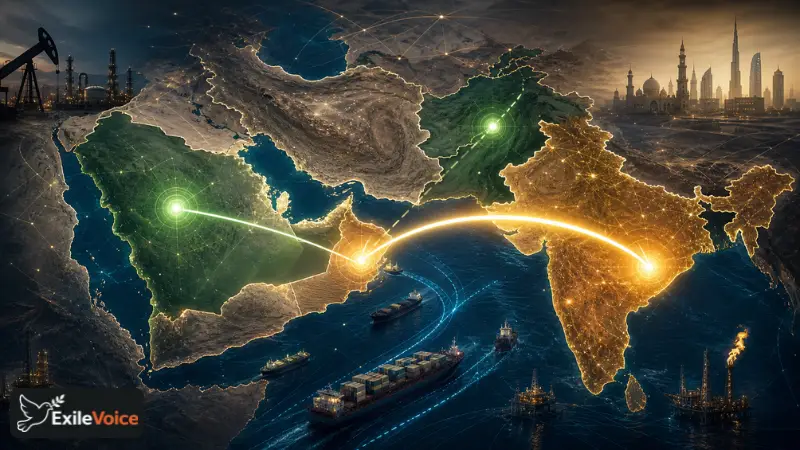
The visit of India’s National Security Advisor, Ajit Doval, to the UAE serves as a critical indicator of this shift. While officially framed around energy security, the underlying current of the engagement points toward a deepening strategic defense partnership. India’s pivot toward the UAE gained momentum when it began reducing energy imports from Iran due to U.S. sanctions, subsequently turning to the Gulf states to fill the void. This economic necessity has blossomed into a comprehensive relationship that now includes infrastructure funds and potential defense collaborations.
In contrast, Pakistan’s relationship with the UAE has faced unprecedented friction. Recent reports of a multi-billion dollar debt repayment demand from the UAE and the alleged deportation of Pakistani nationals highlight a growing rift. This tension is partly attributed to Pakistan's attempt to maintain a neutral stance in the Saudi-Iran rivalry, a position that has seemingly penalized Islamabad in the eyes of Abu Dhabi. As the UAE and Saudi Arabia navigate their own internal competition for regional leadership, Pakistan has doubled down on its alliance with Riyadh, further alienating the UAE.
Meanwhile, India has masterfully capitalized on these tensions. By offering a stable, massive market for energy and a growing security apparatus, New Delhi is filling the space once occupied by Pakistan’s "security export" model. The result is a new regional "quad" where India and the UAE find common ground, leaving Pakistan increasingly reliant on a singular, albeit strong, relationship with Saudi Arabia. This realignment is not merely about energy; it is a fundamental restructuring of influence in the Middle East and South Asia.