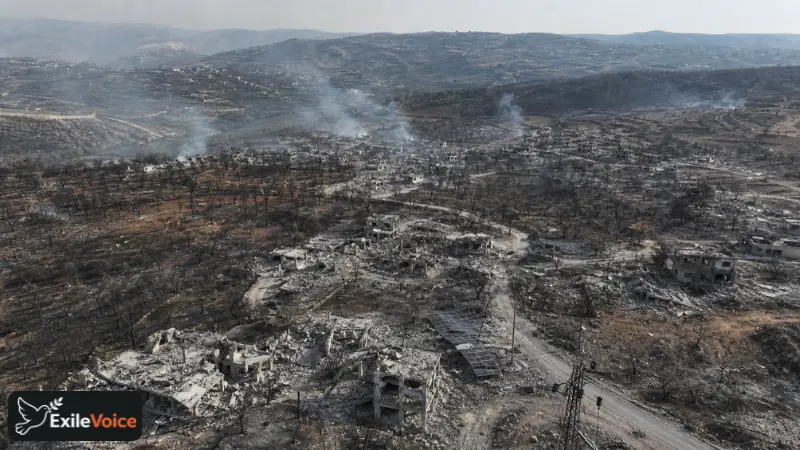
The landscape of modern warfare is undergoing a radical and terrifying transformation, as evidenced by recent military operations in Southern Lebanon. Following the tactical blueprints established in Gaza post-October 2023, Israeli forces have reportedly "perfected" a scorched earth policy that transcends traditional combat. This strategy is not merely about neutralizing an enemy but involves the systematic erasure of entire geographical and social ecosystems to create permanent buffer zones.
Detailed satellite imagery and reporting indicate that thousands of villages in Southern Lebanon have been effectively "raised to the ground." The objective appears to be the total destruction of civilian infrastructure, making the cost of return so high that displaced populations may never find their way home. This is a significant shift from the buffer zones of the 1970s and 80s, which were primarily tactical and often repopulated or contested by militias. Today, the focus is on "de-forestation" and the destruction of electricity grids and solar panels, essential lifelines for the impoverished.
By stripping the land of its topography and greenery, the military intervention is changing the very map of the region. Notable towns like Bint Jbeil, Naqoura, and Khiam have seen their landscapes altered to such a degree that they are unrecognizable. This "technique of displacement" ensures that even if a ceasefire is reached, the lack of habitable environment serves as a permanent deterrent. The global community now faces a critical question: how does international law address a strategy designed to make land uninhabitable for decades, effectively erasing the geography of a nation-state?