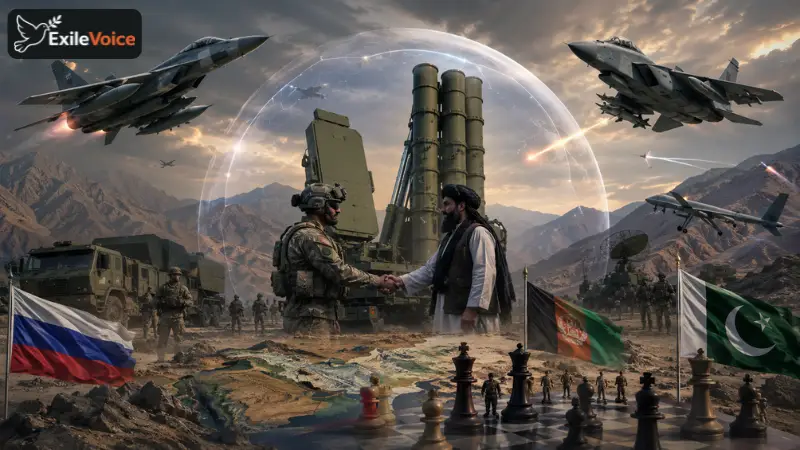
The geopolitical paradigm of South Asia has experienced a historic shift following the recent technical military engagements between the Russian Federation and the Taliban-led administration in Kabul. Under the leadership of figures like Mullah Yaqoob, the interim Afghan government is systematically transitioning from an insurgent force into a conventional state apparatus capable of deploying sophisticated defense infrastructure. Historically, the territory of Afghanistan was subject to external air interventions, with regional powers executing unilateral cross-border drone strikes and aerial bombardments with relative impunity. However, the potential introduction of advanced Russian air defense systems into the Afghan military framework threatens to completely dismantle this status quo. If these weapon systems are successfully deployed and integrated alongside specialized technical training, they will create an anti-access/area-denial (A2/AD) envelope that radically alters the calculus of cross-border counter-terrorism operations in the region.
This burgeoning security partnership represents a fascinating historical irony and underscores the cold realism that dictates modern geopolitics. An ideological movement that traces its origins back to the fierce resistance against the Soviet invasion of the late twentieth century has now established a formal security understanding with Moscow. From the Russian perspective, this engagement is driven by a pragmatic need to secure its southern periphery, counter transnational extremist threats, and assert its role as a primary security provider in Eurasia. For Afghanistan, acquiring state-of-the-art military hardware is directly linked to its immediate security friction with neighboring Pakistan. With diplomatic relations strained over cross-border militancy and the activities of groups like the Tehrik-i-Taliban Pakistan (TTP), Kabul views a robust air defense capability as a vital deterrent against potential punitive air actions by the Pakistan Air Force, which possesses a highly advanced but increasingly challenged aviation fleet.
Furthermore, the strategic footprint of India within this matrix adds another layer of complexity. New Delhi’s sustained diplomatic engagement with both Moscow and the political leadership in Kabul suggests a calculated approach toward regional encirclement. Diplomatic observers do not rule out complex, multi-channel financial and logistical arrangements where regional actors might facilitate the transfer of defensive technologies to Kabul to balance Pakistan’s traditional strategic depth. The operational implications for the Pakistani military are severe. The loss of uncontested air superiority along the western frontier means that any future tactical miscalculation could result in high-value asset attrition, which would significantly boost the morale of non-state militant networks operating across the border. This evolving dynamic forces a complete reassessment of defense doctrines across South Asia, shifting the focus from unilateral kinetic interventions to complex, multi-layered electronic and diplomatic deterrence.