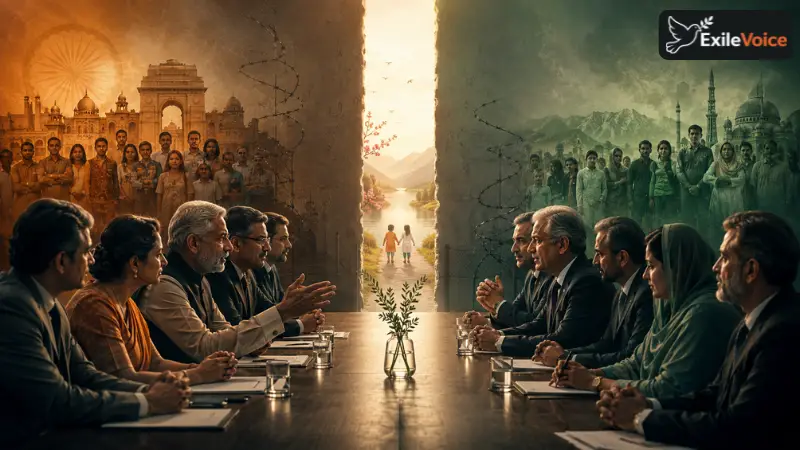
In a development that has stunned many seasoned South Asia watchers, the Rashtriya Swayamsevak Sangh (RSS), the ideological mothership of India's ruling BJP, has signaled a potential shift in its historically hardline stance toward Pakistan. Dattatreya Hosabale, a senior leader within the RSS, recently remarked that the "window for dialogue should always be open," specifically emphasizing the importance of people-to-people ties and civil society engagement. For an organization that has traditionally viewed concessions to Pakistan with extreme hostility, this rhetoric represents a significant departure from the norm.
The timing of this "RSS Pivot" is particularly curious. It comes at a moment when India-Pakistan relations are arguably at their lowest point in decades, following the suspension of trade, the revocation of special status for Jammu and Kashmir, and disputes over the Indus Waters Treaty. Some analysts suggest that this soften-toned rhetoric might be part of a broader effort by the RSS to rehabilitate its international image, particularly in the West. By presenting a more pragmatic and open-minded face to a global audience, the organization may be attempting to counter criticisms of being a fringe or extremist paramilitary group.
However, the shift also reflects a pragmatic realization regarding regional stability. Former Indian military leaders, such as General Manoj Naravane, have seconded the idea that dialogue should remain an option. This support from the military establishment indicates a growing concern about the risks of uncontrolled escalation. There is a sense that while the "state" of Pakistan remains a challenge, the "people" of Pakistan might offer a different avenue for long-term reconciliation. This "Two Pakistans" theory, distinguishing between the military-political elite and the common citizenry, is a recurring theme in the new RSS narrative.
The Pakistani response to this unexpected olive branch has been uncharacteristically positive. The Foreign Office in Islamabad welcomed the voices in India calling for dialogue as a "positive development". This rare moment of reciprocal positivity suggests that despite the intense public vitriol often seen in mainstream media and on platforms, there may be back-channel acknowledgments of the need for a cooling-off period. The fatigue of constant confrontation appears to be setting in on both sides of the border, even if official policy remains largely unchanged.
Despite this rhetorical softening, significant hurdles remain. Within India, the RSS's statements have faced backlash from hardline right-wing segments and media anchors who view any talk of dialogue as a betrayal of national security interests. Furthermore, the RSS leadership was careful to clarify that dialogue is conditional upon Pakistan ceasing its "pin-prick" activities. Thus, while the window has been declared "open," the threshold for actually stepping through it remains high. The future of India-Pakistan relations may not be headed for a grand bargain, but this shift suggests that the ideological barriers to talking are no longer as insurmountable as they once seemed.