Pakistan’s foreign policy has often been a balancing act between competing global and regional powers. Recently, however, there has been a growing debate among analysts and senior journalists regarding the wisdom of Pakistan attempting to act as a mediator in high-stakes conflicts, such as the tension between the United States and Iran. Critics argue that such ambitions may represent a significant diplomatic overreach, potentially exposing Pakistan to risks that far outweigh any possible prestige gained from successful mediation.
The core of the argument against this mediation is a lack of "diplomatic weight." In the world of international relations, effective mediators usually possess either significant economic leverage or a unique security guarantee that both parties value. Pakistan, currently grappling with a severe internal economic crisis and political instability, lacks the necessary "weight" to influence the decision-making of a global superpower like the U.S. or a determined regional power like Iran.
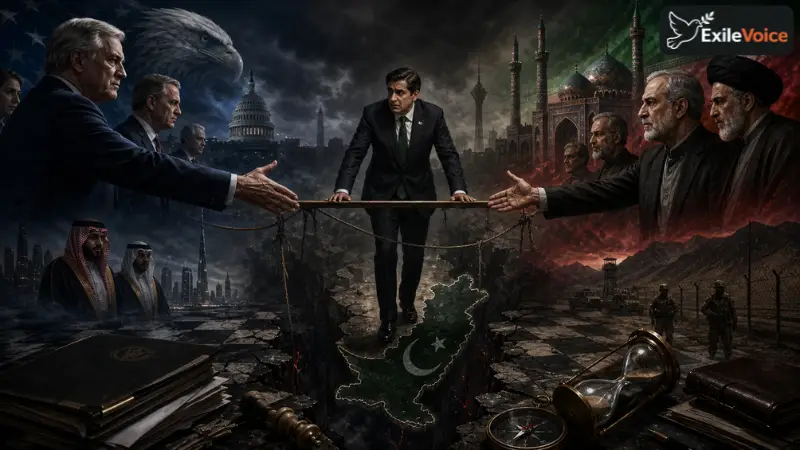
Entering the fray between a "volatile" American leadership and a "principled" Iranian stance is likened by some observers to "dealing in coal," where the most likely outcome is that the mediator’s own hands get blackened. There is a tangible risk that by failing to achieve a breakthrough, Pakistan could end up alienating one or both parties. For instance, leaning too far toward Iran could jeopardize critical financial support from Western-backed institutions or traditional allies in the Gulf, such as Saudi Arabia and the UAE. Conversely, being seen as a proxy for Western interests would damage Pakistan’s relationship with its neighbor.
Furthermore, the internal consensus is that Pakistan should focus on its own "house in order" before attempting to solve the world's most intractable problems. The energy and political capital spent on regional mediation could be better utilized in addressing the domestic economic meltdown and the security challenges on the western border. The phrase "know your worth" is becoming a recurring theme in Pakistani foreign policy circles, suggesting a shift toward a more pragmatic, self-interested approach to diplomacy.
Ultimately, the goal of Pakistani diplomacy should be to safeguard its own national interests without becoming a casualty of "great power" or "regional power" rivalries. As the geopolitical landscape shifts with the potential return of unpredictable leadership in the West, the cost of a failed mediation effort could be devastating for a country already teetering on the edge of economic collapse.