

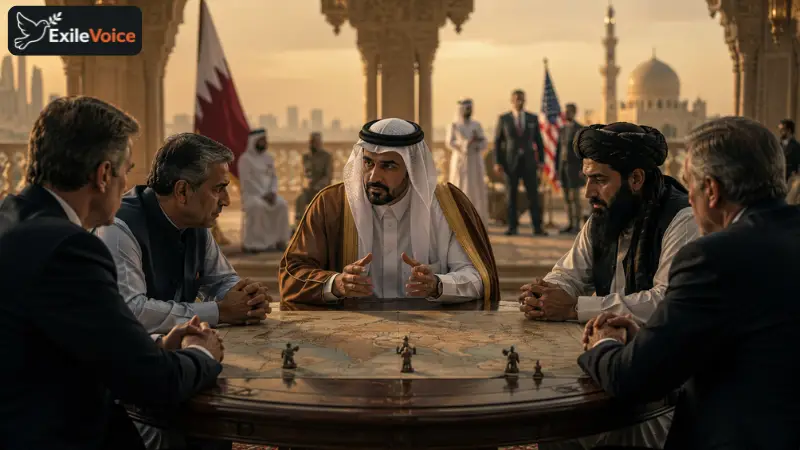
In the complex theatre of international relations, Qatar has increasingly distinguished itself as a pivotal mediator, operating behind the scenes to facilitate high-stakes negotiations that larger, more conventional powers often struggle to navigate. While Pakistan has been heavily spotlighted for its involvement in recent diplomatic efforts, particularly regarding the de-escalation of regional tensions, a deeper analysis reveals that Qatar has often served as the primary engine for the heavy lifting required to reach substantive agreements.
Qatar’s diplomatic efficacy is rooted in its unique positioning and a long-standing mastery of back-channel communications. Unlike larger regional players, Qatar has leveraged its compact size and strategic agility to maintain channels with diverse, and often adversarial, parties. This was clearly evidenced during the delicate U.S.-Taliban negotiations in Doha, where Qatar provided the necessary infrastructure and neutral ground for dialogue that was otherwise impossible.
Recent reports, including insights from the Financial Times, highlight that in the current climate of regional volatility, Qatar’s negotiators, specifically experts like Ali Al-Thawadi and Hamad Al-Kubaisi, have been essential. While leaders like Pakistan’s Army Chief Asim Munir have provided a visible face to these diplomatic initiatives, the actual drafting and technical navigation of these complex deals have been largely driven by the Qatari delegation.
Qatar's success in this arena is no accident; it is the result of a deliberate, vision-led strategy that seeks to amplify the nation's influence far beyond its geographic borders. By hosting pivotal U.S. military bases while simultaneously maintaining open lines with regional actors, including those traditionally at odds with Washington, Qatar has carved out a unique role as the world's indispensable broker. This diplomatic framework suggests that the future of conflict resolution in the Middle East will continue to rely heavily on such specialized intermediaries, who combine technical expertise, linguistic capabilities, and a pragmatic approach to navigating entrenched geopolitical mistrust.

