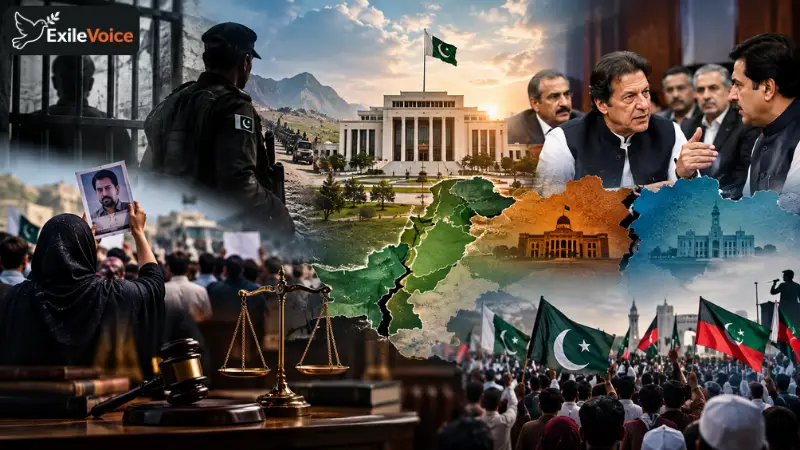
The political arena in Pakistan is witnessing heightened friction between federal authorities, provincial administrations, and political opposition groups. The dynamics of governance, civil rights activism, and interparty relations are undergoing a rigorous test as institutional pressures mount across various administrative tiers.
A central issue dominating the political discourse is the handling of civil liberties and the enforcement of the rule of law. Incidents involving the enforced disappearances of political workers and local activists have triggered sharp rebukes from regional leadership and legal advocates. Critics argue that provincial governments possess the constitutional mandate and administrative duty to demand accountability from security sectors and initiate transparent judicial inquiries into missing persons cases. However, systemic bottlenecks and political hesitation often dilute institutional responses, leaving grassroots workers vulnerable to arbitrary detentions.
Interprovincial relations have also been strained by conflicting narratives regarding security responsibility. Public statements from provincial leadership attributing security threats to neighboring regions have sparked sharp backlashes from local political stakeholders, amplifying regional sensitivities. These friction points demonstrate the fragile state of federalism in Pakistan, where regional security management frequently clashes with national counterterrorism strategies.
Meanwhile, political parties are navigating internal organizational challenges as they attempt to mount cohesive opposition strategies. Discrepancies between local party leadership and grassroots activists regarding protest logistics and public mobilization have exposed strategic fractures within major political movements. Effective leadership requires aligning institutional authority with the grievances of ordinary citizens, a balance that remains elusive amidst ongoing state crackdowns and censorship measures. As political factions prepare for upcoming national demonstrations and public campaigns, the ability of these movements to sustain unified pressure on the ruling establishment will largely determine the future course of democratic resistance in the country.