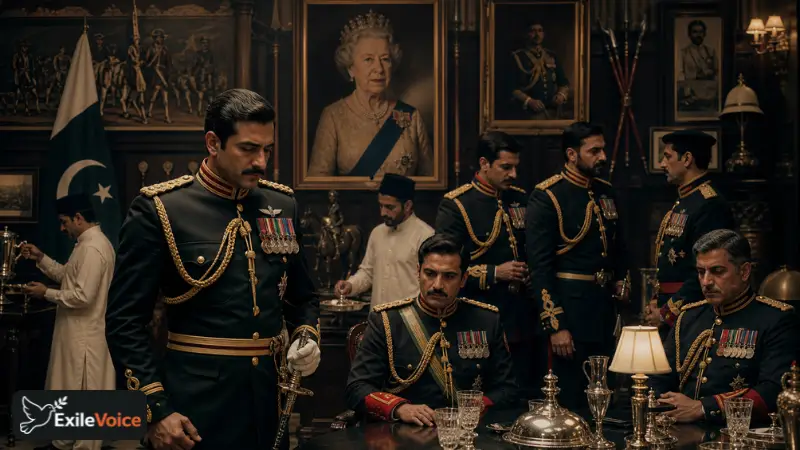
The recent viral footage from a ceremonial gathering of the Guides Cavalry, an elite armored regiment of the Pakistan Army, has reignited a fierce national debate regarding the military's institutional identity. At the heart of this controversy is the visible juxtaposition of colonial-era traditions with the realities of a modern, sovereign state. The footage prominently displayed portraits of the late Queen Elizabeth II, a choice that has struck a dissonant chord with a public increasingly sensitive to the optics of "neo-colonialism."
Historically, the Guides Cavalry was one of the most decorated units under British rule, famously marching from Mardan to Delhi during the 1857 War of Independence, or the "Mutiny," as the British termed it, to secure the city for the Crown. For their loyalty and ferocity, they were granted the title "Queen’s Own" and awarded a unique red piping on their collars, a distinction shared by only three units globally. While these honors were once marks of supreme martial achievement, their celebration in 2026 creates a psychological chasm between the military elite and the citizenry.
The professional insight here is not just about aesthetics but about institutional alignment. When a national army continues to celebrate the suppression of its own ancestors as a "heroic" legacy, it creates an identity crisis. The footage showed officers in ceremonial mess dress being served by staff in traditional Pakistani attire, shalwar kameez and prayer caps, reinforcing a visual hierarchy reminiscent of the "Gora Sahib" and the local servant. This "colonial hangover" suggests that while the British left in 1947, the mindset of the "jailer" and the "subjugated" may have been inherited by the post-colonial military structure.
This cultural friction is more than social media fodder; it explains the deepening mistrust between the public and the armed forces. As the Pakistani populace becomes more politically aware and anti-imperialist in its outlook, the military’s insistence on preserving British martial traditions is viewed not as professional heritage, but as a lingering symbol of an "occupying" force mindset. To bridge this gap, the institution may need to undergo a profound cultural decolonization that prioritizes national identity over imperial nostalgia.