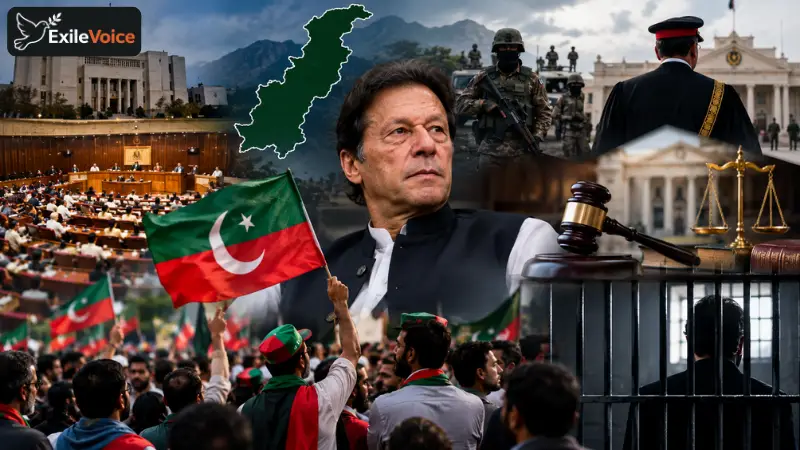
The discourse surrounding the role of the military in governance remains a central theme in the political fabric of Pakistan. Recent public communications from the Inter-Services Public Relations (ISPR) have reignited a long-standing debate regarding the separation of powers and the influence of the armed forces on civilian administration. Historically, the intersection of military strategy and national foreign policy has been a delicate balancing act, but when the military apparatus begins to dictate political narratives, it raises significant concerns about the health of democratic institutions.
Professional analysis of the current landscape suggests that a "hybrid" governance model has increasingly blurred the lines between constitutional mandates and executive overreach. The primary critique often leveled by political analysts is the lack of transparency in how the military manages its relationship with the political class. For a nation to prosper, its leadership must be derived from the will of the people, as manifested through free and fair elections. When the perception exists that political leaders are cultivated in "test tubes" or brought to power through managed mandates, the legitimacy of the entire state structure is called into question.
The danger of "politicizing the military and militarizing politics" cannot be overstated. When military leaders engage in extensive press conferences covering everything from international diplomacy and water rights to domestic legislation, they risk encroaching upon the domain of the Foreign Office and the Federal Government. In a standard democratic framework, the civilian leadership makes strategic decisions, which the military then implements. A reversal of this hierarchy often leads to a disconnect between the populace and the state, as the military may be seen not as a protector of the people, but as a political actor competing for power and resources.
Furthermore, the "credit-sharing" capacity of the institutional leadership is a vital indicator of national unity. In moments of military success, such as defense against external aggression, the narrative should ideally be led by civilian representatives to reinforce the supremacy of the parliament. When the military claims sole credit for national achievements while bypassing civilian stakeholders, it creates a vacuum of accountability. To move forward, Pakistan requires a sincere commitment to the "truth" in the public domain, an honest accounting of past interventions and a resolute step back from political engineering. Only by allowing professional institutions to focus on their core competencies can the state restore the trust of its citizens and ensure long-term stability.