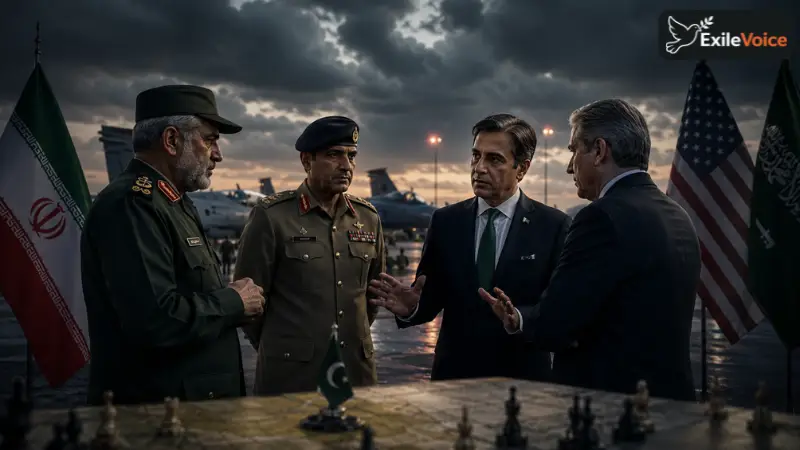
The geopolitical landscape of South Asia has been recently jolted by a series of reports suggesting clandestine military cooperation between Pakistan and Iran. At the heart of this controversy is a CBS News report claiming that Pakistan permitted Iran to park military aircraft on its fields, even as Islamabad attempted to position itself as a neutral mediator in regional conflicts. This development has triggered a wave of scrutiny from Washington to Tehran, raising fundamental questions about the veracity of Pakistan's diplomatic assertions and the complexities of its "double game" strategies.
Senator Lindsey Graham, a figure with a long-standing though often turbulent relationship with Pakistan, has been particularly vocal. In recent congressional hearings, Graham expressed deep skepticism, suggesting that if these reports are accurate, it would be fundamentally inconsistent with Pakistan's role as a fair peace mediator. His remarks reflect a broader sentiment within the U.S. Beltway that views Pakistan's strategic hedging with suspicion. The tension is palpable: while some U.S. officials question Pakistan's reliability, others, including President Donald Trump, have maintained a more pragmatic or even supportive public stance, acknowledging Pakistan's historical utility in regional negotiations.
Analysis from strategic experts, such as Michael Kugelman of the Atlantic Council, suggests a more nuanced reality. While Pakistani officials have vociferously denied the claims of "shielding" Iranian assets from U.S. strikes, they have acknowledged the presence of Iranian jets. The official explanation posits that these aircraft were utilized for transporting high-level diplomats amidst a volatile security environment. This explanation carries weight when considering the genuine security threats faced by Iranian officials in the region. However, the timing, post-ceasefire, and the specific nature of the military hardware involved continue to provide ammunition for critics who argue that Pakistan is attempting to maintain favor with Tehran at the expense of its Western alliances.
The fallout from this incident extends beyond mere headlines. It touches upon the "credibility gap" that has long plagued Pakistani foreign policy. Reports from outlets like CNN suggest that even within the White House, there is growing impatience regarding how Pakistani mediators represent the positions of both Washington and Tehran to one another. This "mediation friction" highlights the danger of being too public about a role that traditionally requires the utmost discretion. By seeking "a moment in the sun" through high-profile diplomacy, Islamabad has inadvertently invited a level of scrutiny that may ultimately undermine its strategic objectives.
Ultimately, the Pakistan-Iran aircraft controversy serves as a microcosm of the broader South Asian dilemma. Pakistan finds itself in a precarious three-way pull between its neighbor Iran, its traditional ally Saudi Arabia, and its critical partner, the United States. In an era where strategic transparency is increasingly demanded by global powers, the traditional Pakistani art of "hedging" is being tested like never before. Whether Islamabad can maintain its status as a viable mediator while navigating these conflicting interests remains the defining question for its foreign office in the coming years.