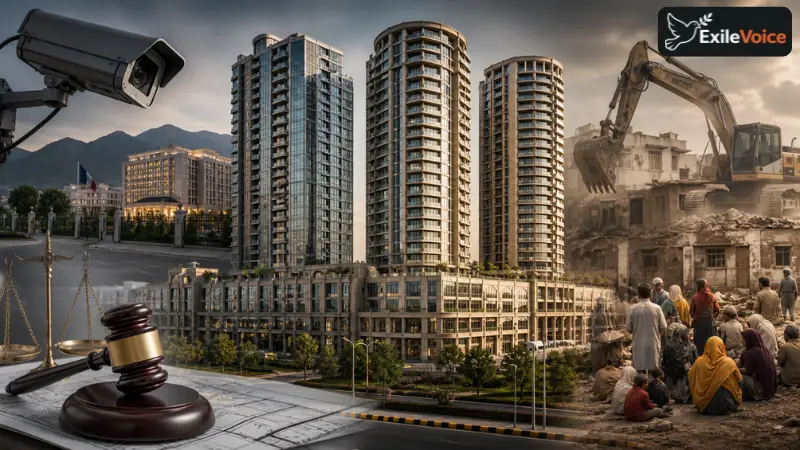
The towering structures of One Constitution Avenue in Islamabad stand as a physical manifestation of Pakistan’s complex intersection between urban development, legal disputes, and elite maneuvering. Located strategically near the Serena Hotel and the French Embassy, these towers have been mired in controversy for over two decades. Originally, the land was leased by the Capital Development Authority (CDA) for the construction of a luxury hotel. The rationale behind such leases is typically to stimulate investment, generate tax revenue, and enhance the city’s business infrastructure. However, the project pivoted from a commercial hotel to residential apartments, sold to high-net-worth individuals without the necessary regularization of the lease.
The transformation of the project raises significant questions regarding the role of the CDA. For years, massive construction continued in plain sight, requiring heavy machinery and constant logistical movement. The silence of the regulatory authorities during this period suggests either gross negligence or a deeper systemic issue of corruption and kickbacks. The recent aggressive operation to vacate the towers, characterized by forced evictions and property damage, has been met with widespread condemnation. While the initial breach of lease terms is a legal reality, the residents, many of whom invested in good faith, have become collateral damage in a dispute triggered not by a sudden discovery of illegality, but by security concerns related to foreign delegations.
Reports suggest that the crackdown was catalyzed by security footage taken from the towers during a visit by American dignitaries. The ability to monitor sensitive diplomatic areas from these heights raised alarms, leading to a swift judicial and administrative response. This incident highlights a recurring theme in Pakistani governance: the law is often dormant until it intersects with the interests or security of the powerful. Furthermore, the crisis at One Constitution Avenue serves as a stark contrast to how land disputes are handled for the less privileged. While the elite residents of these towers received media attention and prime ministerial intervention, hundreds of homes in poorer neighborhoods like Bari Imam were demolished with little fanfare or legal recourse.
To resolve this impasse, a pragmatic approach is required. Rather than demolition or displacement, the towers could be integrated into a "condo-hotel" model, similar to those managed by global chains like Marriott or Hilton. This would allow the buildings to fulfill their original commercial purpose while protecting the investments of individual apartment owners. Such a solution would require the residents to relinquish personal occupancy in favor of a revenue-sharing model based on hotel operations. Ultimately, the One Constitution Avenue saga is a cautionary tale of how regulatory lapses and the lack of transparent urban planning can lead to multi-billion rupee legal nightmares.