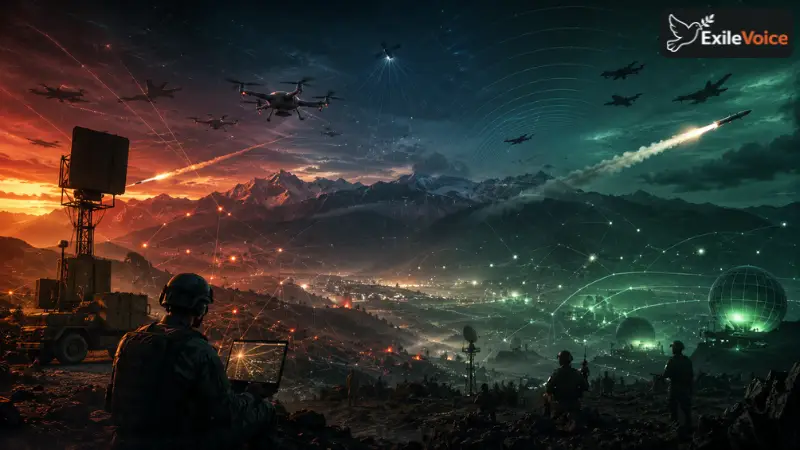
The traditional image of warfare between India and Pakistan, defined by the tank battles of 1965 or the infantry-led insurgencies of 1971, is officially a thing of the past. Following the intense 88-hour military engagement between the two nuclear-armed neighbors, a new doctrine of warfare has emerged. This era is characterized by "net-centricity," standoff strikes, and the pervasive use of drone technology, shifting the conflict from the physical battlefield to the digital and cyber realms.
From a military perspective, both sides claim victory from the recent skirmish, but their gains are fundamentally different. Pakistan’s military establishment has successfully sold a narrative of "resilience and skill." By reportedly downing high-end Indian jets and maintaining superior "optics" in the global press, the Pakistan Air Force (PAF) bolstered national morale. This engagement introduced "standoff strikes" and "kill chains" into the common Pakistani lexicon, making the concept of modern, technical war more palatable to a younger generation that has never experienced a full-scale conventional conflict.
However, the technical advancements reveal a dangerous escalation ladder. India has unveiled a new doctrine of "deep strike credibility," demonstrating that a terror attack on its soil can now trigger direct retaliation against mainland Pakistan, rather than just the disputed territory of Jammu and Kashmir. The successful deployment of Brahmos cruise missiles sent a clear signal that Indian forces can bypass traditional defenses. In response, Pakistan is doubling down on Chinese-made J-35 stealth fighters and the Fata missile system, signaling a renewed arms race that neither country’s economy can easily sustain.
This shift toward "remote" warfare, involving sensors, jamming, and cyber-centric operations, makes the region more dangerous. Because the war feels more technical and less "bloody" in the traditional sense, there is a risk that leaders may find military adventurism more digestible. Yet, the core issues remain unresolved. The ceasefire between the two nations holds, but meaningful peace is effectively dead. The rivalry has hardened, and both sides are rearming at an accelerated pace.
Furthermore, the conflict has moved beyond the battlefield and into the realm of "influence operations." Social media gurus, independent analysts, and clickbait sites now play a major role in shaping the perception of victory. This "production" of war keeps the public in a state of constant mobilization, often distracting from internal failures. For Pakistan, the focus on "new toys" like the J-10C or PL-15 missiles masks the grim reality of rising domestic terrorism. The recent deadly suicide attack in Bannu serves as a stark reminder that while the military focuses on high-tech external rivals, internal security is deteriorating under the weight of mismanagement and political interference.
As South Asia enters this new era, the lack of a diplomatic breakthrough on Jammu and Kashmir means that the next crisis is likely to arrive faster and with greater intensity. The transition to high-tech warfare has not solved the underlying political disputes; it has merely provided more sophisticated tools for an age-old rivalry.