The 2026 state elections in India have provided a startling revelation for regional observers who had predicted the decline of Prime Minister Narendra Modi and the Bharatiya Janata Party (BJP). Following the somewhat lackluster performance in 2024, the BJP has not only stabilized its position but has successfully expanded its footprint into traditionally hostile territories. The party’s penetration into West Bengal, a state that has long defied the saffron wave, marks a historic shift in Indian electoral politics. Combined with victories in Assam and Puducherry, the BJP has demonstrated an ability to reinvent its narrative and maintain institutional control.
For Pakistan, these results carry heavy implications. The hope that a weakened Modi administration would eventually seek rapprochement out of necessity has been effectively extinguished. Instead, the BJP has consolidated its power, setting the national agenda so effectively that even the opposition, including the Congress party, often operates within a framework dictated by the BJP’s ideological boundaries. The displacement of communist and Marxist parties in Kerala further illustrates a broader shift toward a more nationalist and right-leaning political center in India.
The disparity between the political models of India and Pakistan is becoming increasingly stark. While Pakistan’s model is often criticized for its simplicity, where policy is frequently the direct reflection of the military leadership’s will, India’s electoral landscape is a labyrinth of complex alliances and divergent interests. This complexity has fostered a more resilient, albeit controversial, political culture that Pakistan has struggled to engage with effectively. The "back-channel" diplomacy that once existed has withered, leaving a dangerous vacuum in communication during a time of high regional tension.
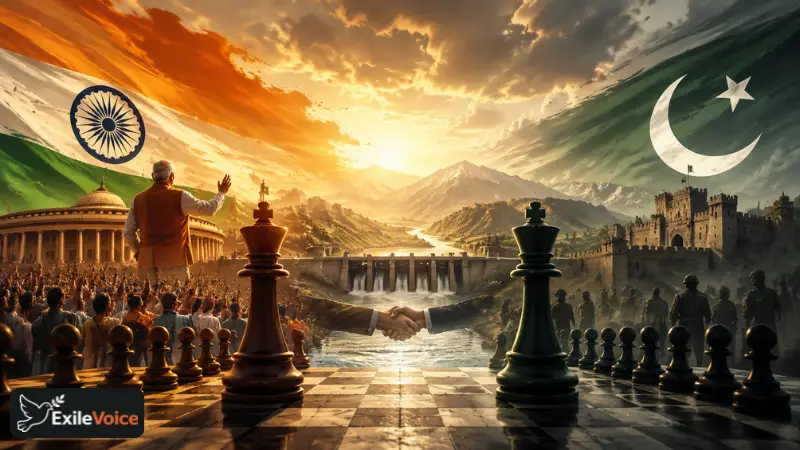
In light of the Trump administration's weakening position in the United States and the potential rise of a more India-friendly Democratic platform, Pakistan’s establishment must rethink its regional strategy. The current "honeymoon" period between the Pakistani military and the Trump administration is a fleeting window of opportunity. To avoid further isolation, Islamabad must move beyond its rigid internal focus and initiate sophisticated, perhaps hidden, dialogues with New Delhi. Topics such as water security, environmental challenges, and trade could serve as the foundation for a new back-channel. Failure to adapt to the reality of a consolidated BJP-led India will only result in Pakistan falling further behind in the regional balance of power.