

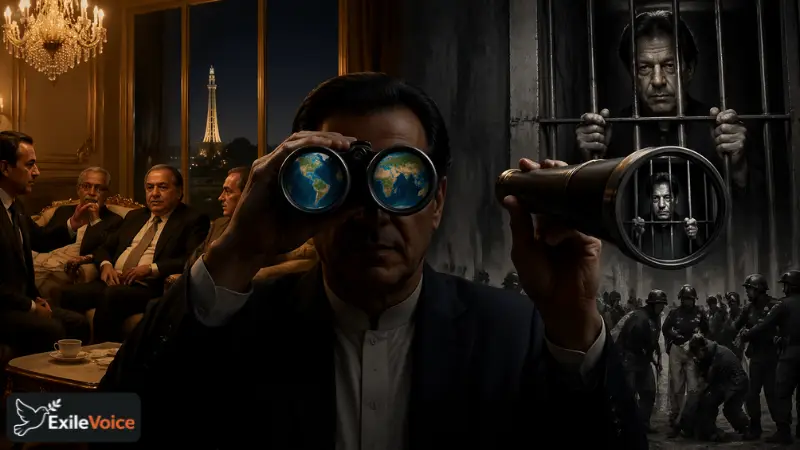
A curious phenomenon has emerged within Pakistan’s intellectual and media circles: a hyper-fixation on international civil liberties coupled with a profound silence regarding domestic human rights crises. This "color blindness," as described by prominent analysts, reveals a deep-seated duality in how the Pakistani elite perceives justice, governance, and the role of the press.
International Criticism vs. Domestic Silence Prominent Pakistani media figures and politicians frequently take to social media to condemn Western governments for their handling of protests or suppression of academic freedom. For instance, the use of security firms to monitor pro-Palestine students in British universities or the perceived failures of the Trump administration are met with swift and sharp criticism from Islamabad’s elite. While these international issues are indeed worthy of critique, the contrast with the domestic landscape is jarring.
Within Pakistan, the "Sharif-Zardari-Asim" regime has been accused of overseeing one of the most significant crackdowns on political dissent in the country's history. Thousands of political activists, journalists, and even businessmen have been detained under dubious charges. Yet, those same voices that champion the rights of students in London often remain mute regarding the incarceration of local leaders like Imran Khan or the physical and professional threats faced by their own colleagues.
The Role of the Intellectual as a Critic In a healthy democracy, the primary responsibility of the intellectual and the journalist is to act as a critic of their own society and political system. This is the feedback loop that prevents institutional decay. Figures like Tucker Carlson in the US, despite their controversies, have shown a willingness to apologize to their audience for misjudgments or to critique the very leaders they once supported. In contrast, the Pakistani "regime-supportive" media rarely exhibits such introspection.
Instead of holding the local establishment accountable for the erosion of the rule of law or the deteriorating health of high-profile prisoners, the elite focuses on the "success" of Pakistan’s role as a regional mediator. While it is true that Pakistan is currently enjoying a moment of global positive limelight due to its role in US-Iran mediation, this diplomatic "high" often serves as a distraction from the structural collapse of civil liberties at home.
The Consequence of Selective Vision This selective vision has long-term consequences for the credibility of the Pakistani media and the stability of its social contract. When the elite lives in the "comfort zones" of posh sectors and ignores the plight of the common citizen or the political prisoner, they lose the moral authority to criticize international actors. The "muddled mind" of the Pakistani elite, shaped by decades of state-controlled narratives, prevents them from seeing that a country cannot be a champion of global peace while its own citizens remain under a state of perpetual legal and political siege. True intellectual integrity requires a mirror, not just a telescope.

