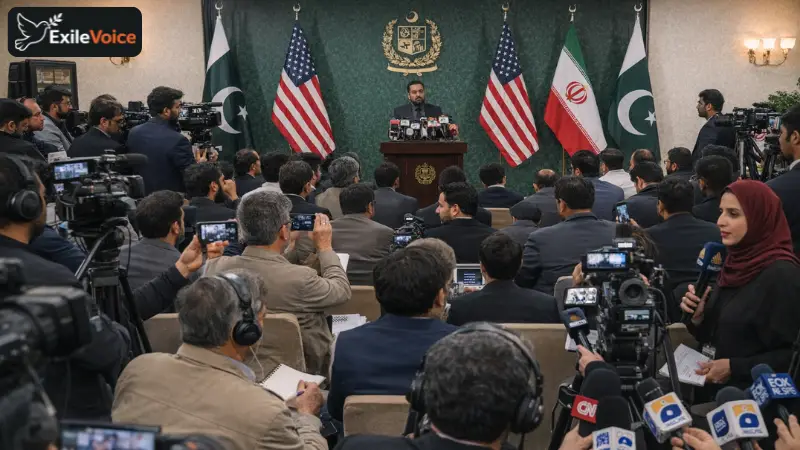
As Islamabad became the focal point of global attention, the management of information and the conduct of the media during the U.S.-Iran talks have come under intense scrutiny. The contrast between international reporting and domestic media coverage has highlighted significant gaps in professional access and the strategic communication of the Pakistani state. While global outlets like CNN and Al Jazeera provided real-time insights into draft exchanges and leadership dynamics, many domestic journalists found themselves relegated to the periphery of the event.
One of the most concerning aspects of the weekend was the "information vacuum" experienced by the local press. Leading Pakistani news channels were observed citing American and Iranian sources for updates occurring within their own capital. Reports suggest that while international journalists were granted "visa on arrival" and high-level access, the domestic press was often restricted to a "Convention Center" hub, far removed from the actual negotiating rooms. This lack of access forced a shift in coverage toward peripheral details, such as the hospitality arrangements and the availability of free amenities, rather than the substance of the diplomatic breakthroughs or failures.
The "hospitality-led" media strategy has faced criticism for potentially undermining the professional dignity of the fourth estate. Reports of journalists focusing on the quality of catering or the speed of the provided Wi-Fi, rather than the strategic implications of the 21-hour deadlock—have raised questions about the objectives of the Ministry of Information. Professionalism was further tested by the casual conduct of some media personnel, with instances of inappropriate attire and a lack of preparation being documented and shared on social media. This has led to a debate about the "international image" Pakistan projects when hosting world-class diplomatic summits.
Furthermore, the strategic decision to maintain a "neutral" stance is being tested. Unlike previous conflicts where the media and government were encouraged to take sides, the current directive appears to be one of absolute neutrality to facilitate the role of the mediator. However, this shift has been met with confusion by some who have historically advocated for more partisan foreign policy stances. The case of the Islamabad talks proves that hosting such events requires not just security and logistical preparation, but a sophisticated media strategy that empowers local journalists to provide high-quality, independent analysis.
To improve future engagements, experts suggest that Pakistan must move beyond "hospitality diplomacy" and ensure that its media core is professionally briefed and integrated into the communication flow. The goal should be to project a state that is not only a capable host but also an intellectually and professionally robust partner in global affairs.