

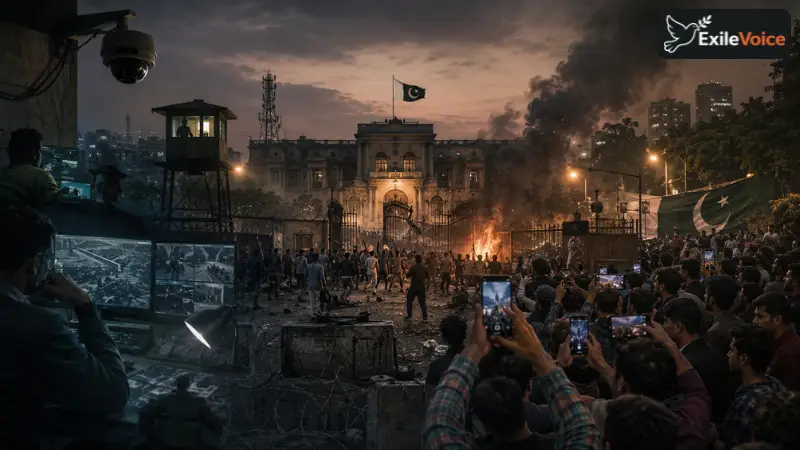
The anniversary of May 9, 2023, remains the most contentious date in contemporary Pakistani history. On one side, the state narrates a story of insurrection and organized attacks on military installations; on the other, the Pakistan Tehreek-e-Insaf (PTI) and its supporters allege a sophisticated "false flag" operation designed to dismantle the party's political infrastructure. This divide is not just a matter of political opinion but has become a fundamental rift in the national consciousness.
Central to the "false flag" argument is the question of surveillance and security. In a modern state where individual data, phone calls, and movements are meticulously monitored by intelligence agencies, critics argue that it is statistically improbable for major military installations like the Lahore Corps Commander’s House to be left vulnerable to spontaneous mob violence without some level of state complicity or strategic withdrawal. The argument posits that security posts were intentionally abandoned to lure protesters into a trap, thereby providing the state with the legal and moral justification to crack down on the political opposition.
Public sentiment, at least within digital spheres, appears heavily skewed toward this skeptical view. Real-time polling during discussions on the topic indicates that a vast majority, nearly 90% in some samples, believe the events were a setup rather than a grassroots uprising. While these polls are subject to confirmation bias among specific audiences, they reflect a profound lack of trust in official narratives. Furthermore, the "erasure" of political figures from mainstream media has only served to drive the conversation underground, where it thrives on social media through encrypted apps and independent digital journalism. The clash between the "old guard" establishment and a tech-savvy, defiant youth population suggests that the fallout from May 9 is far from over.

