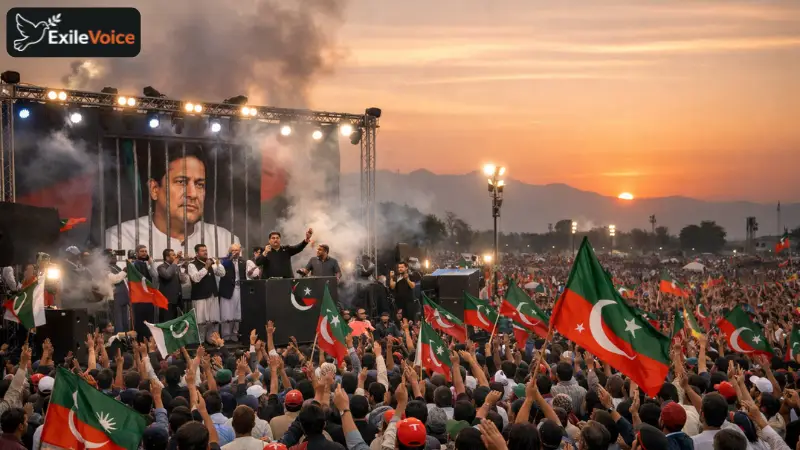
The political landscape of Pakistan continues to be a theater of high-stakes drama and shifting narratives. The recent gathering in Mardan, organized by Pakistan Tehreek-e-Insaaf (PTI), serves as a critical case study in political resilience. Despite a prevailing atmosphere of skepticism fueled by analysts and social media commentators who questioned the party's ability to mobilize under current pressures, the turnout told a different story. The sea of people in Mardan sent a clear message to observers both domestic and international: the populist bond between the incarcerated leadership and the public remains remarkably intact.
This mobilization is particularly significant given the context of what many describe as "Form 47 governance", a reference to allegations of electoral engineering. The leadership, including figures like Suhail Afridi, utilized the platform to announce upcoming street movements, including planned demonstrations in Kashmir on April 25th and Lahore on May 1st. However, the event also highlighted a growing internal challenge within the party structure. While the masses are willing to show up, there is a discernible "restlessness" among the rank and file regarding the lack of a conclusive, strategic roadmap for the release of their founding chairman.
The transition from a "Release Force" to a more palatably named "Peace Force" reflects a leadership grappling with branding and optics in a hostile environment. Yet, for the average worker, these semantic shifts mean little without tangible action. If the leadership continues to provide temporary "time-pass" maneuvers instead of a definitive plan, they risk de-motivating a base that has, thus far, proven itself to be historically loyal. The Mardan rally reset the "temperature scale" of Pakistani politics, proving that while strategies may be in flux, the public’s alignment is not.