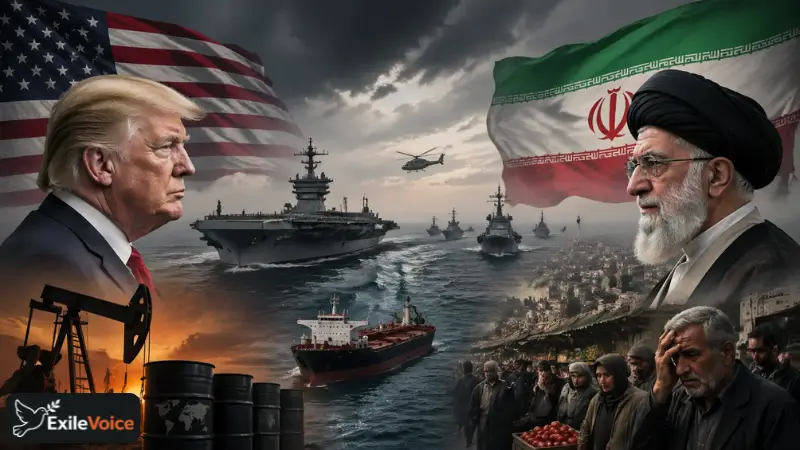
The geopolitical landscape of the Middle East has entered a grueling new phase that strategic analysts are increasingly defining as a "Long War." Unlike the rapid, high-kinetic operations of previous decades, the current conflict between the United States and Iran has pivoted toward a war of nerves and economic endurance. President Donald Trump has reportedly signaled to his administration that the strategy is no longer about immediate military conquest, but a sustained, long-term naval and economic blockade designed to squeeze the Iranian regime until it reaches a breaking point.
This strategy of "pressure as a replacement for war" is having a profound impact on the ground in Iran. Despite Tehran’s refusal to yield publicly, the economic cost of the blockade is becoming unsustainable. Internal reports suggest that inflation in Iran has surged to nearly 70 percent, with basic food items like meat becoming an unattainable luxury for the average citizen. While the Iranian government has attempted to mitigate this by raising salaries for state employees and introducing food coupons, the country is effectively burning through its foreign exchange reserves to survive.
The global repercussions of this standoff are most visible at the gas pump. Oil prices have continued their steady climb, recently hitting 111 USD per barrel. As Iran hoards its resources and utilizes regional partners like Pakistan to reroute trade, the international community is feeling the pinch of sustained energy inflation. This is not a "clean" war with a clear exit strategy; rather, it is a "dirty exit" scenario where both sides are betting on the other's internal threshold for pain.
Washington’s objective is to achieve a total economic freeze of Iranian exports, while Tehran is banking on the hope that the United States or its European allies will blink first due to the rising domestic costs of energy. This stalemate has turned the region into a "Pressure Cooker," where diplomacy has been replaced by a war of endurance. The coming months will test the resolve of both regimes, as the "Long War" continues to reshape the global economic and security order.