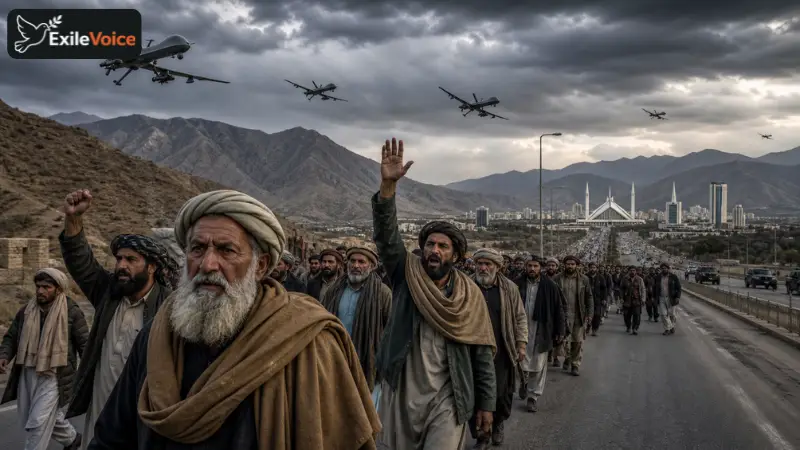
The security situation in Khyber Pakhtunkhwa (KP) has reached a critical juncture, as local leaders and tribal elders express increasing frustration with the government's counter-terrorism strategies. Sohail Afridi’s recent "Long March" threat represents a significant escalation in the rhetoric coming from the region. Afridi has issued a stern ultimatum: either the drone strikes in KP must cease, or the people of the province will march on Islamabad to demand peace or return in "coffins."
This ultimatum is rooted in a deep sense of abandonment and a rejection of the "security first" approach that often results in collateral damage and civilian displacement. The demand for a "Jirga" (tribal council) with military and government authorities highlights a desire for a more localized, transparent, and respectful approach to security. The people of KP have historically borne the brunt of the "War on Terror," and the continued use of drones is viewed by many as a violation of sovereignty and a failure of the state to protect its own citizens without resorting to remote warfare.
However, skepticism remains regarding the efficacy of such threats. This is not the first time a Long March has been proposed, and previous attempts at negotiation through Jirgas have often failed to yield sustainable peace. The dilemma for the Pakistani state is two-fold: how to effectively manage the militant threat while maintaining the trust and cooperation of the local population.
The rhetoric of "peace or the coffin" underscores the desperation felt in the border regions. If the state continues to rely on kinetic operations without a corresponding political and social strategy, it risks further alienating a province that is already on the edge. The threat of a mass movement toward the capital serves as a reminder that the peripheries of Pakistan are no longer willing to remain silent while their security is managed from afar.