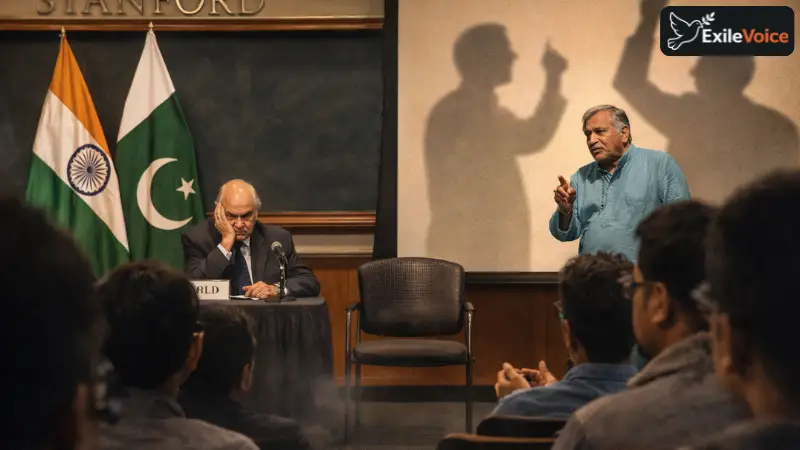
While global leaders were locked in a 21-hour marathon in Islamabad, a smaller but equally revealing drama was unfolding at Stanford University. The "Dosti" (Friendship) Conference, intended to bridge the gap between Indian and Pakistani students and intellectuals, instead highlighted the deep-seated fears and institutional pressures that continue to stifle South Asian dialogue. The centerpiece of the conference, a debate between veteran Pakistani diplomat Javed Jabbar and Indian diplomat Mani Shankar Aiyar, ended in a controversial cancellation that has left a bitter taste in the mouths of proponents of peace.
Reports indicate that after an initial session where Jabbar’s arguments for dialogue were exceptionally well-received, the atmosphere shifted. Indian students reportedly faced immense pressure and threats from back home, leading to the abrupt cancellation of Javed Jabbar's scheduled keynote lecture. While the Indian diplomat was allowed to proceed with his engagements, Jabbar was effectively silenced, eventually leading to his early departure from the U.S. This incident serves as a stark reminder that "personal diplomacy", the idea that individual friendships can overcome national hostilities, often hits a wall when confronted by state-sponsored narratives and domestic political pressure.
This "Stanford Standoff" parallels the larger issues seen in the Islamabad negotiations. Both events demonstrate that while individuals like General Asim Munir or JD Vance may find a personal rapport, they are ultimately bound by the institutional red lines of their respective states. In India, the "fanning out" of the personal friendship between Prime Minister Modi and President Trump has not translated into a strategic advantage during the current Iran crisis. Indian analysts are now warning against the dangers of over-relying on personal ties over institutionalized, long-term diplomatic strategies.
The lesson for South Asia and the broader world is clear: friendship conferences and personal summits are "token" gestures unless they are backed by the political courage to hear opposing views. The silencing of a senior figure like Javed Jabbar at one of the world’s most prestigious universities is not just an embarrassment for the organizers; it is a symptom of a larger regional ailment where fear of "looking weak" prevents the very dialogue needed to ensure stability. Real diplomacy requires the "heart" to listen to difficult truths, a quality that seems in short supply from the classrooms of Stanford to the hotels of Islamabad.