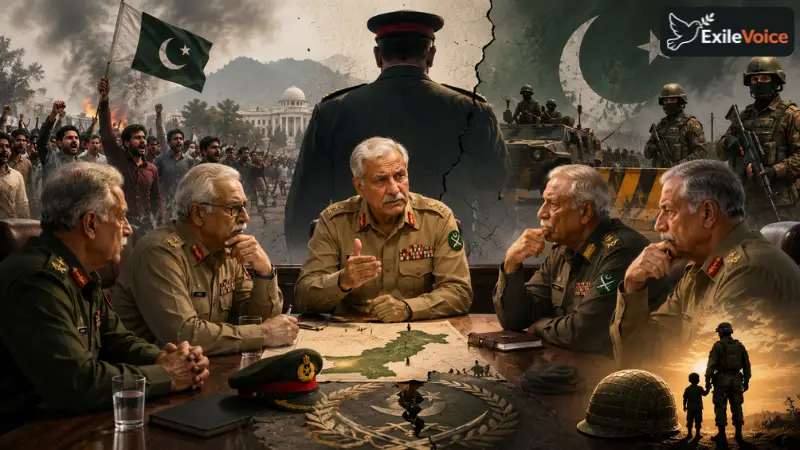
In a stark departure from conventional political discourse, a group of distinguished Pakistani military veterans has issued a powerful warning regarding the state's current operational trajectory. Under the banner of the "Veterans of Pakistan Forum," retired generals, colonels, and brigadiers, figures formerly responsible for the country’s security architecture, have publicly criticized the prevailing "Hard State" approach adopted by the current military leadership.
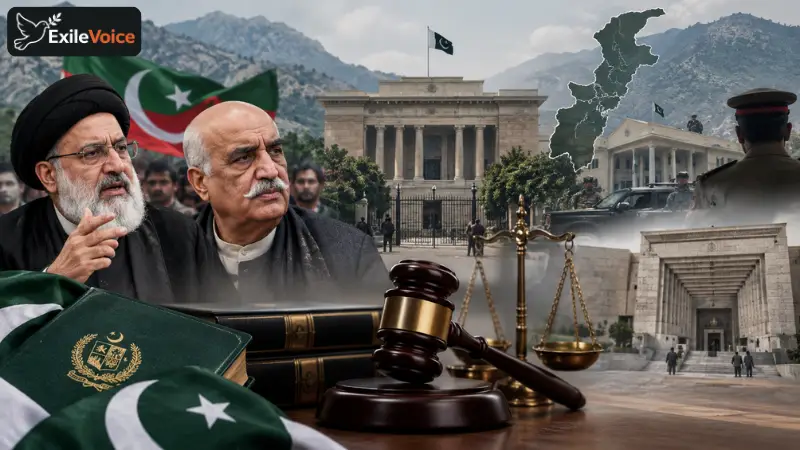
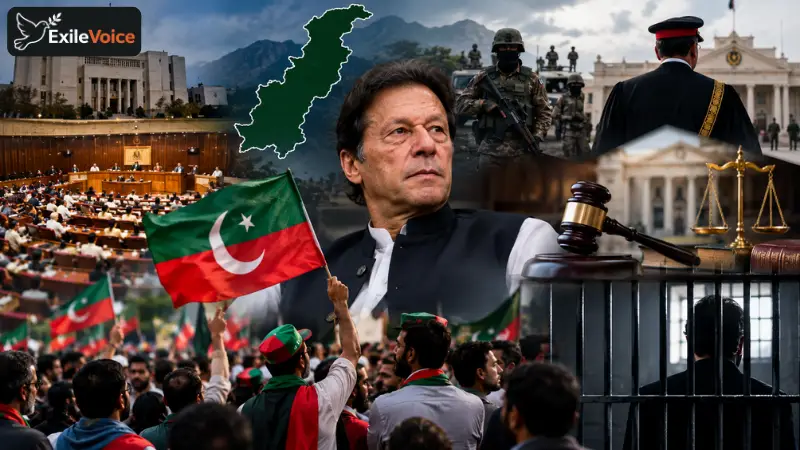
The core of their concern lies in the handling of civil disputes, particularly in Azad Kashmir. The veterans argue that treating what is essentially a constitutional or socio-political grievance as a military or law-and-order issue is a fundamental miscalculation. The imposition of curfews, movement restrictions, and the use of force against protestors in Kashmir has drawn sharp condemnation from those who once commanded the very forces now tasked with these actions.
The veterans' statement highlights a critical breakdown in the trust between the institution and the public. They point out that in the public eye, there is little distinction left between the Army, the Punjab Police, or the Frontier Corps; the institution as a whole is facing unprecedented disregard. When food and medicine supplies are disrupted and civilians are targeted, the uniform itself is tarnished.
This intervention is particularly significant because it does not originate from political opponents, separatist movements, or international critics. It comes from within the "sons of the soil", those who groomed the current leadership and taught them the ethics of command. They caution that the state’s current propensity to "crush" opposition is not only ineffective but also creates vulnerabilities that external adversaries, including India, can exploit.
The veterans warn that this heavy-handed approach risks isolating the state from its own people. As the historical record shows, relying on force to resolve complex political issues in a country as large and diverse as Pakistan has historically led to disastrous outcomes. Their message is clear: if the military cannot handle its internal disputes with wisdom, patience, and constitutional adherence, it risks losing the very foundation of its authority. The call to move away from militarized solutions and toward political consultation is not just a suggestion; it is a plea to save the integrity of the institution and the nation.