

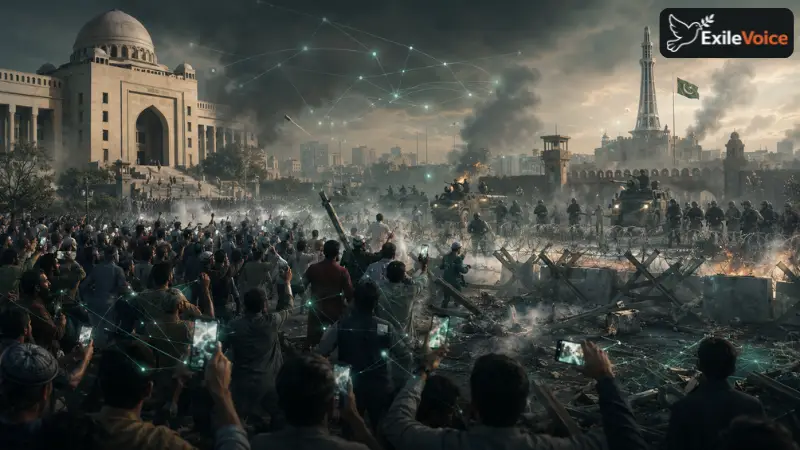
The date of May 9, 2023, has become a watershed moment in the modern history of Pakistan, marking a point of no return for the country’s delicate civil-military balance. What began as a dramatic arrest of former Prime Minister Imran Khan from the premises of the Islamabad High Court quickly escalated into a nationwide phenomenon that challenged the very foundations of the state’s power structure. The arrest, executed by paramilitary forces with a level of force rarely seen in judicial settings, acted as a catalyst for a level of public defiance that caught the military establishment by surprise.
For decades, the Pakistani military was viewed as a "red line" that political actors crossed at their own peril. However, the events following Khan’s arrest saw protestors entering high-security zones, including the Corps Commander’s House in Lahore and the General Headquarters (GHQ) in Rawalpindi. This breach was not merely physical; it was symbolic. It represented a fracturing of the traditional social contract between the populace and the armed forces. The military’s response, labeling the day as a "Black Day" and launching a massive crackdown, underlined the existential threat the establishment felt from a populist movement that refused to be cowed by traditional means of intimidation.
The professional insight to be gained from this period is the evolving nature of political resistance in the digital age. Despite a total internet shutdown and a media blackout, the narrative of "resistance" continued to flourish through alternative media and decentralized communication. The use of AI-generated content and viral montages allowed the PTI to maintain its presence in the public consciousness even while its leadership was behind bars. This shift highlights a critical lesson for state actors: in a hyper-connected world, physical control of the narrative through traditional media is no longer sufficient to maintain legitimacy or order.
Moreover, the legal aftermath of May 9 has raised serious questions about the rule of law. The Supreme Court’s initial declaration that the arrest was illegal provided a brief glimmer of judicial independence, yet the subsequent re-arrests and the mass detention of thousands of political workers without clear charges have painted a grim picture of the justice system. The "forced" press conferences, where politicians announced their departure from politics or their party, have been analyzed by experts as a regression to the coercive political engineering of the 1990s. As Pakistan moves further into 2024 and beyond, the shadow of May 9 remains, serving as a reminder that while the state may have regained physical control, the battle for the hearts and minds of the citizenry is far from over.

