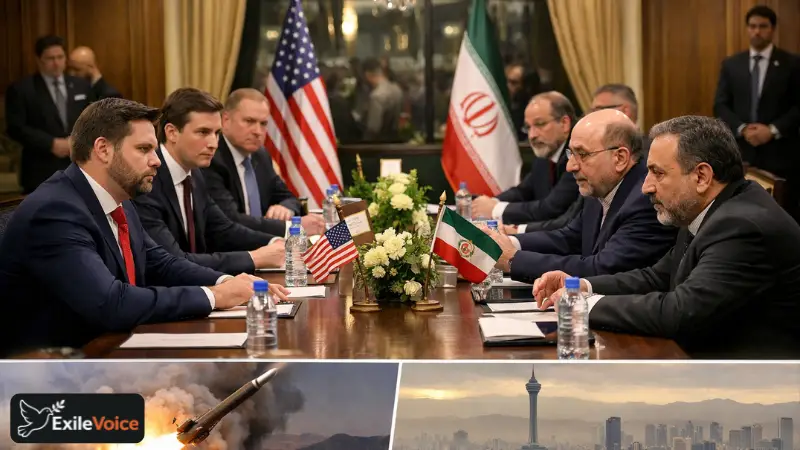
The global diplomatic spotlight has shifted intensely toward Islamabad, Pakistan, where high-stakes negotiations between the United States and Iran have reportedly been underway for over 16 hours. Facilitated by Pakistan, this trilateral engagement represents a critical attempt to de-escalate tensions in the Middle East. The American delegation is notably high-profile, led by Vice President JD Vance and Jared Kushner, President Trump’s son-in-law and a key Middle East strategist, alongside Special Envoy Steve Cough. On the Iranian side, the presence of Parliament Speaker Mohammad Bagher Ghalibaf and Foreign Minister Abbas Araghchi, a veteran of nuclear negotiations, underscores the gravity of these talks.
However, while the "optics" of the Islamabad meetings suggest a diplomatic milestone, the substance remains shrouded in secrecy. Journalists from major international outlets like The New York Times and Al Jazeera have been restricted to a convention center away from the Serena Hotel, the venue of the talks. This media blackout has fueled speculation regarding the true nature of the dialogue. While the Pakistani public views this as a moment of national prestige and global relevance, seasoned analysts are questioning whether the ceasefire and subsequent talks are a genuine peace effort or a calculated "strategic pause" designed to benefit the U.S. and Israel.
The timing of these negotiations coincides with aggressive military maneuvers that complicate the narrative of neutral arbitration. For Iran, the primary objective is the lifting of primary and secondary sanctions that have crippled its economy, leading to losses estimated between $300 billion and $1 trillion. The Iranian leadership is under immense internal pressure due to infrastructure damage, energy crises, and hyperinflation. If the Islamabad talks fail to provide meaningful relief from these sanctions, the Iranian regime faces a potential domestic backlash from a frustrated and economically exhausted population.
Ultimately, the Islamabad summit is a high-stakes gamble. For President Donald Trump, it is an opportunity to extract a deal through what some describe as a "well-orchestrated bluff" of total destruction. For Iran, it is a desperate search for an economic lifeline. As the rounds of talks continue, the world waits to see if this leads to a sustainable framework or if it merely serves as a tactical repositioning for further conflict.