

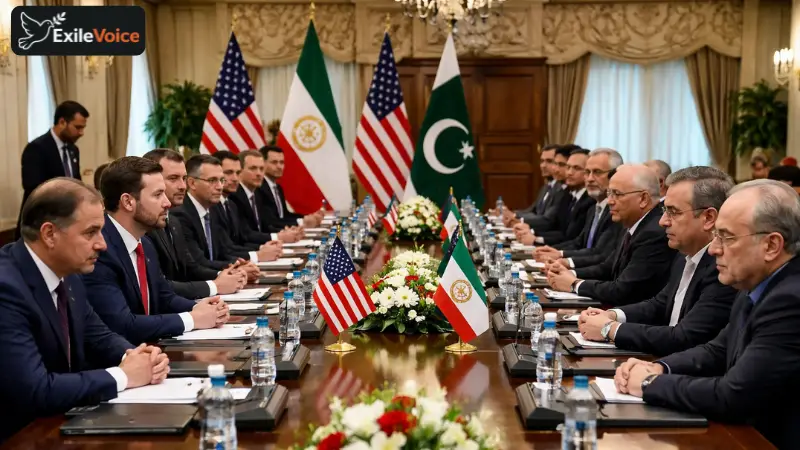
The recent high-stakes diplomatic engagement in Islamabad, involving U.S. Vice President J.D. Vance and an empowered Iranian delegation, has sparked intense debate among international relations experts. While the surface-level narrative suggests a search for regional peace, a deeper analysis reveals a complex layer of "deception" and tactical stalling. Leading American analysts, including Professor John Mearsheimer and Professor Robert Pape, suggest that the 15-hour dialogue may have been less about a sustainable ceasefire and more about providing the Trump administration with necessary breathing room to reposition its military assets.
A critical observation from the talks is the disparity in authority between the two delegations. The Iranian side, led by figures such as Mohammad Baqer Qalibaf and Dr. Abbas Araghchi, arrived with full empowerment from Iran’s Supreme Leader, Ayatollah Ali Khamenei. In contrast, Vice President J.D. Vance’s role appeared constrained. Traditionally, executive diplomatic authority in the U.S. system lies with the Secretary of State, in this case, Marco Rubio. Vance was accompanied by advisors often described as the "eyes and ears" of the Israeli administration, leading to theories that his movements were being micro-managed to ensure alignment with Zionist interests rather than independent U.S. peace objectives.
Furthermore, the abrupt conclusion of the talks, where Vance provided a mere three-minute press briefing and an ultimatum, has led experts to believe the process was a "trap" for Iran. By engaging in these talks, Iran may have inadvertently softened its defensive posture, allowing the U.S. to initiate a naval blockade just days later. This "time-buying" strategy allowed the U.S. to continue its troop build-up in the Persian Gulf under the guise of diplomatic effort. While the Pakistani government has gained significant "external legitimacy" by acting as the mediator, the concrete reality on the ground remains one of military escalation and naval maneuvers, suggesting that a broader conflict may still be on the horizon post-April 22nd.

