

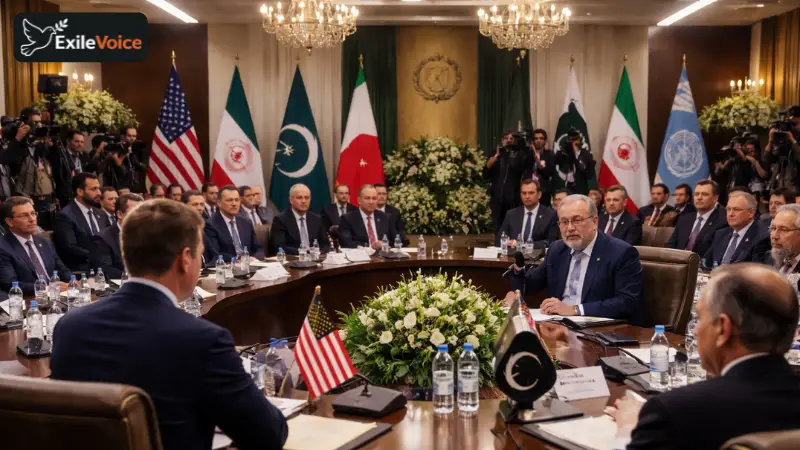
As the international community turns its eyes toward Islamabad in April 2026, the stage is set for a high-stakes encounter between the United States and Iran. With major portions of Islamabad and Rawalpindi under heavy security, the arrival of international delegates, including Iranian Foreign Minister Dr. Abbas Archi and U.S. Vice President JD Vance, signals a pivotal moment in global diplomacy. However, a deeper analysis suggests that beneath the surface of these scheduled peace talks lies a complex game of tactical positioning rather than a sincere pursuit of a resolution.
The primary objective for the Trump administration appears to be the immediate and unconditional reopening of the Strait of Hormuz. For Washington, the disruption of global oil prices and LNG trade has reached a critical threshold. By bringing the parties to the negotiating table, the U.S. is attempting to generate a "moral force" that prioritizes international trade over the fallout of the recent 40-day conflict. The strategy is to let "events take over," shifting the global narrative away from the destruction of Iranian infrastructure and toward the urgent need for maritime stability.
Critically, the sincerity of these talks is being questioned by veteran analysts. While Iran seeks the removal of primary and secondary sanctions to rebuild its shattered economy, the U.S. focus remains narrow. There is a glaring absence of discussion regarding war reparations or compensation for the estimated $100 billion in damage to Iran’s civil and military infrastructure. Instead, the Trump administration is pressuring NATO to form a naval task force specifically for minesweeping and securing the Strait. This move indicates that if diplomacy fails to open the gates of trade, the U.S. is prepared to use international military pressure to achieve the same result.
The role of regional players like Pakistan and Turkey is also under the microscope. Both nations have a vested interest in the removal of sanctions to resume legitimate trade and energy projects, such as the Iran-Pakistan-India (IPI) pipeline. Yet, political missteps, such as controversial statements from defense officials, provide Israel with leverage to question the neutrality of the mediators. Ultimately, the Islamabad talks face a potential stalemate, as the gap between Iran's demand for economic survival and the U.S. demand for maritime compliance remains as wide as ever.

