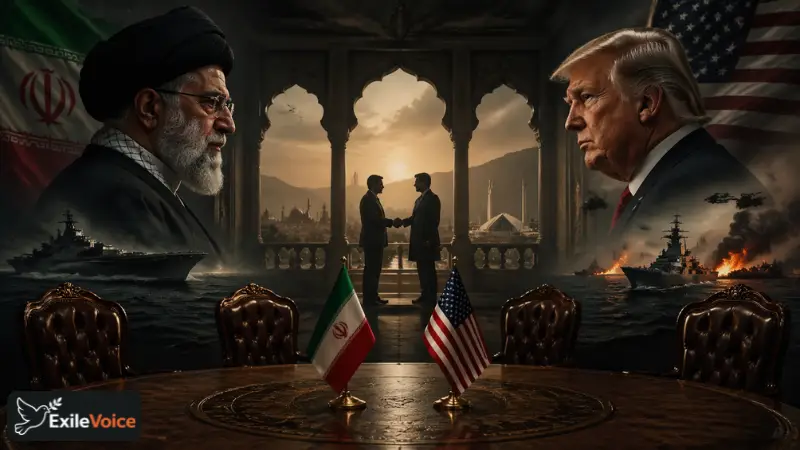
The delicate threads of diplomacy in Islamabad are currently facing a severe test as the scheduled second round of peace talks between Iran and the United States teeters on the verge of collapse. As of late Tuesday night in Pakistan, reports indicate that neither party has arrived in the capital to commence negotiations, with a critical ceasefire deadline looming just hours away. The central point of contention remains the naval blockade imposed by the United States on Iranian ports, a move Tehran characterizes not merely as a diplomatic sanction, but as an explicit "act of war."
Iranian Foreign Minister Abbas Araghchi has publicly asserted that until the blockade is lifted, Iran will not return to the negotiating table. This stance directly counters President Donald Trump’s administration, which has signaled a refusal to ease pressure, viewing the blockade as a necessary tool to maintain a "position of strength." This geopolitical tug-of-war has left mediators, including Pakistan, in a precarious position. While Pakistani Information Minister Attaullah Tarar emphasized that Islamabad has acted in good faith to facilitate peace, the official government narrative has increasingly shifted the burden of responsibility onto Tehran, suggesting that Iran’s refusal to participate is the primary obstacle to extending the ceasefire.
High-level movements in Washington further underscore the uncertainty. Reports indicate that Vice President J.D. Vance, initially expected to depart for Islamabad, returned to the White House for urgent consultations. Similarly, key figures like Jared Kushner and Steve Witkoff have reportedly redirected their flight paths toward Washington rather than South Asia. This suggests a last-minute recalibration of U.S. strategy as the 4:50 AM (PKT) ceasefire expiration approaches.
The stakes extend beyond the diplomatic table. Observers like Professor Mohammad Marandi have warned regional neighbors, including Saudi Arabia and the UAE, to brace for a potential resumption of hostilities. If the diplomatic channel remains closed and the blockade continues, the region faces the grim reality of "Round 2" of kinetic conflict. For Pakistan, the role of "matchmaker" or "mediator" is at a crossroads; while a successful summit would bolster its international standing, the current deadlock threatens to leave the nation caught in the middle of a reignited regional firestorm.