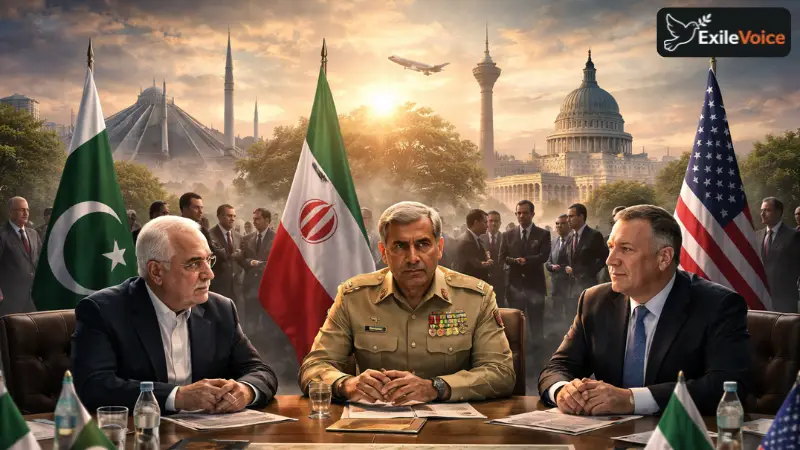
As the world watches the de-escalation of tensions between the United States and Iran, the role of Islamabad has emerged as a cornerstone of this newfound stability. Reports indicate that a three-page strategic document is currently being drafted in Tehran, involving high-level Pakistani military leadership and Iranian officials. This document aims to establish a six-month roadmap for a final peace settlement between Washington and Tehran, potentially ending decades of economic sanctions and hostility.
The core of this "Islamabad process" involves significant financial and nuclear concessions. On the table is the release of approximately $27 billion in Iranian oil revenues currently frozen in Japan, South Korea, Qatar, Iraq, and China due to US secondary sanctions. President Trump’s willingness to facilitate this release marks a radical departure from previous "maximum pressure" campaigns.
However, the road to a "Grand Bargain" is obstructed by intelligence narratives and tactical skepticism. Recent reports from Western media outlets have highlighted the "Pickaxe Mountains," an Iranian facility allegedly impervious to air strikes. These reports suggest that Iran may be accelerating its nuclear enrichment in underground fortresses that bunker-buster bombs cannot reach. Analysts like Dr. Trita Parsi suggest that such stories are often planted by "status quo" lobbies in Washington to sabotage any potential peace deal by introducing new, non-negotiable security concerns.
Furthermore, the failure of a rumored US special operations mission near Isfahan, initially framed as a "pilot rescue" but later revealed to be an attempt to seize enriched material, seems to have convinced the Trump administration that a military solution to the Iranian nuclear program is unfeasible. This realization has shifted the focus toward a diplomatic "off-ramp."
Pakistan’s involvement is not merely altruistic; it is a calculated move to stabilize its western border and secure its own energy future. By acting as the primary interlocutor, Islamabad has positioned itself as an indispensable player in Middle Eastern security. The success of this process now depends on whether President Trump can navigate the domestic political minefield in the US Congress and whether Iran is truly willing to trade its nuclear leverage for total economic reintegration.