In the complex and often volatile landscape of Pakistani politics, a recurring phenomenon has emerged that threatens the very fabric of democratic discourse: the "ISI Agent" label. This reflexive accusation, often directed at journalists, politicians, and activists who challenge the status quo, has become a tool for silencing dissent and delegitimizing critical voices. The recent experiences of prominent media figures like Wajahat S. Khan highlight a disturbing trend where asking uncomfortable questions or stepping outside the established "comfort zone" of public opinion leads to immediate branding as an asset of the Inter-Services Intelligence (ISI).
This "knee-jerk reaction" is not merely a social media skirmish; it represents a deep-seated culture of a "blame game" that permeates Pakistani society. When individuals such as Salman Akram Raja, Shahbaz Gill, or Shahzad Akbar are analyzed through the lens of their survival or professional success, the public often resorts to conspiracy theories rather than engaging with the substance of their actions or the complexities of their legal battles. For instance, the fact that a legal professional like Salman Akram Raja can continue to practice law in Lahore despite the prevailing political crackdown is viewed by some as "evidence" of state backing, rather than a testament to legal resilience or the intricacies of the judicial system.
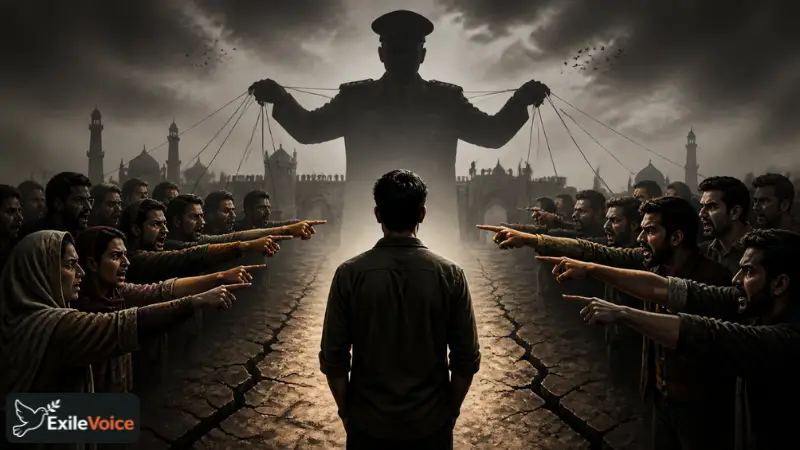
The danger of this culture lies in its utility to the actual "occupier groups" or the "establishment." By fostering division and mistrust among those who should be allies in reform, the establishment successfully employs a "divide and rule" strategy, a remnant of colonial tactics. When journalists and activists spend their energy defending themselves against accusations from their own community, the focus shifts away from the systemic issues plaguing the country, such as the erosion of the rule of law and the suppression of civil liberties.
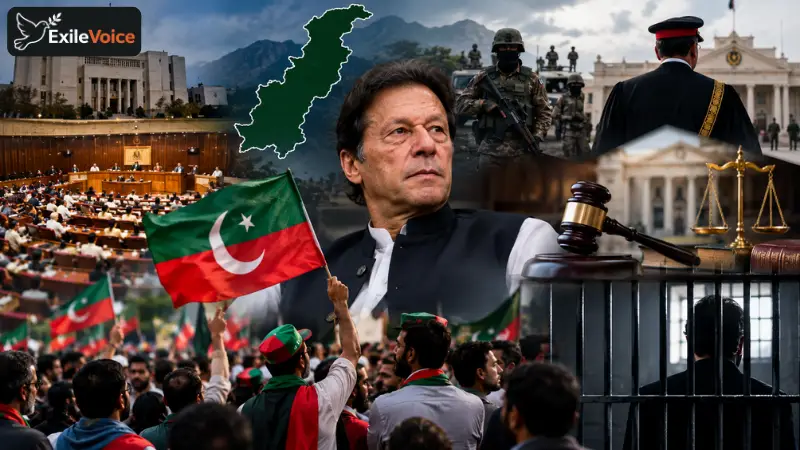
Moreover, this environment of suspicion breeds a sense of "be-hissi" or apathy within the general populace. As the public witnesses the constant infighting and character assassination within the opposition and the media, the motivation to mobilize for larger causes, such as economic justice or democratic integrity, wanes. The sacrifice of leaders like Imran Khan and his family, who remain incarcerated or under intense legal pressure, is often reduced to social media engagement metrics rather than serving as a catalyst for genuine national movement. To move forward, Pakistan must transition from a nation of "blame-gamers" to one that supports individual efforts and respects the bravery required to stand on principle, even when those principles lead to uncomfortable questions