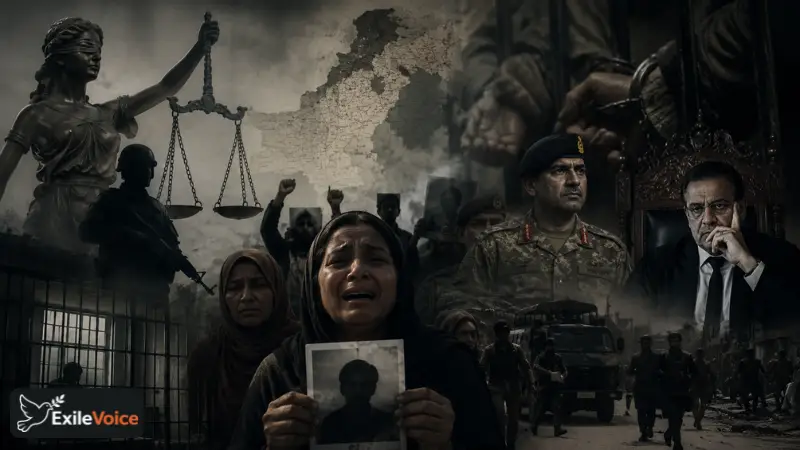
The human rights situation in Pakistan has reached a boiling point, with mounting evidence of extrajudicial killings and the controversial use of military courts for civilian trials. Recent reports from the Lahore High Court suggest that the number of missing persons and victims of extrajudicial actions may have exceeded 3,000. This trend has sparked intense criticism from both domestic activists and international observers, who argue that the rule of law is being systematically dismantled in favor of "de facto" military governance.
A central point of contention is the trial of civilians in military courts, a practice that the Supreme Court of Pakistan initially declared unconstitutional. However, through various legal maneuvers and administrative pressure, these trials have proceeded, often without providing the accused with the right to a fair appeal. Even when the court ordered that legislation be enacted within 45 days to grant the right of appeal, the government and military establishment have reportedly failed to comply. This leaves hundreds of families in a state of perpetual uncertainty, with their loved ones "rotting" in jails without a transparent legal process or presented evidence.
The crisis of governance extends to the treatment of the media. Senior journalists and activists who dare to question the establishment often find themselves targeted. While some high-profile figures associated with the ruling elite face serious allegations of money laundering or asset concealment without consequence, others are picked up by authorities for merely sharing a tweet. This selective application of the law has created a "chilling effect" on free speech and investigative journalism in the country.
Furthermore, the rise in terrorism, with Pakistan recently being ranked among the most affected nations globally, has been used as a justification for increased security measures that often infringe upon civil liberties. The assassination of religious and political figures, such as Maulana Muhammad Idris Trangzai, highlights the failure of the state to provide basic security despite the centralization of power. As the state focuses on silencing political opposition, the vacuum in actual security and judicial oversight continues to grow, leading to a profound sense of insecurity among the general population.