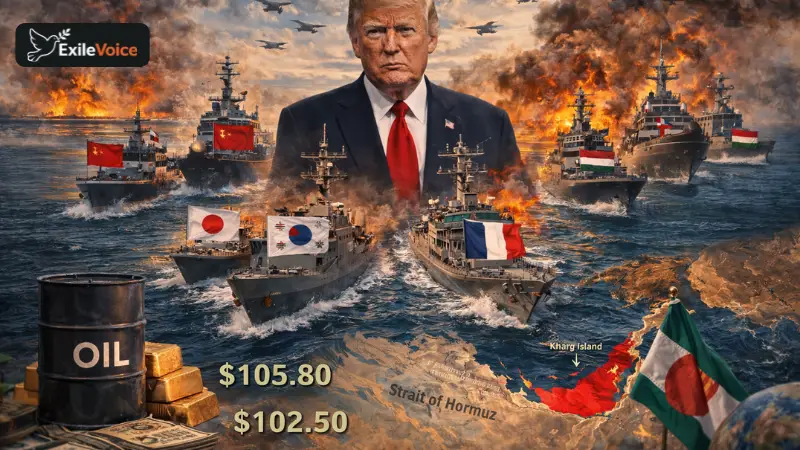
The global energy market is currently navigating a period of unprecedented volatility as the conflict in the Middle East enters a critical phase. On Monday, March 16, 2026, the Asian markets responded to a weekend of failed diplomatic efforts with a sharp increase in oil prices. Brent crude witnessed a jump of $2.50, trading at $105.80, while West Texas Intermediate (WTI) climbed to over $102.50. This surge is a direct consequence of the ongoing hostilities surrounding Iran and the strategic bottlenecks in the Strait of Hormuz.
President Donald Trump and his administration spent the weekend engaged in intensive negotiations with seven key nations, including China, Japan, South Korea, the United Kingdom, France, Germany, and Italy. The primary objective is the formation of what is being termed the "Hormuz Coalition." This proposed maritime alliance aims to contribute naval destroyers, frigates, and surveillance drones to protect commercial shipping and ensure the Strait of Hormuz remains navigable. The strategy is designed to provide a "protection shield" that would theoretically stabilize the market by guaranteeing the flow of energy.
However, the path to this coalition is fraught with diplomatic hurdles. Japan has cited its pacifist constitution as a significant barrier to military participation, while France has maintained that a ceasefire must precede any naval deployment. Perhaps most intriguing is the role of China. Despite being an ally of Iran, China is a major consumer of Iranian oil, which continues to flow through the Strait. President Trump’s recent statement, suggesting he might delay his upcoming visit to Beijing if President Xi Jinping does not assist in negotiating with Tehran, indicates a desperate need for Chinese diplomatic leverage.
The stakes involve more than just shipping lanes. Within the U.S. Congress, influential figures like Senator Lindsey Graham have publicly advocated for the seizure of Kharg Island, Iran's primary oil export terminal. The logic behind such a high-stakes move is to control 90% of Iran's revenue model, effectively forcing a surrender. As the West struggles to present a united front, the "Hormuz Coalition" remains a theoretical construct, leaving the global economy vulnerable to the whims of a regional war that shows no signs of abating.