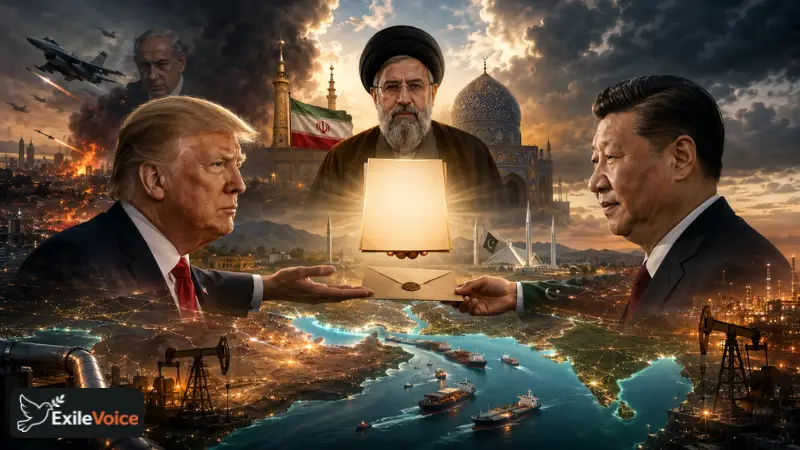
As May 2026 unfolds, the international community is witnessing a high-stakes diplomatic gamble centered in Washington, Tehran, and Beijing. President Donald Trump is reportedly pushing for a comprehensive 14-point "one single pager" agreement with Iran’s top leadership. This initiative, however, is not merely a bilateral effort; it is deeply intertwined with the upcoming summit between Trump and Chinese President Xi Jinping scheduled for May 14-15. Trump’s motivation appears twofold: to secure a massive foreign policy win before meeting the Chinese leader and to stabilize global energy markets that have seen crude oil prices surge toward $120 per barrel.
The role of regional intermediaries has become unexpectedly prominent. Reports from major news agencies like Reuters and the New York Times suggest that Pakistan is playing a pivotal role as a diplomatic conduit. Iran has explicitly stated that its structured response to Trump’s proposal will be conveyed via Islamabad. Meanwhile, China has emerged as a "principal pressure" point. Foreign Minister Wang Yi and Iranian Foreign Minister Dr. Abbas Araghchi have maintained close contact, with Beijing demanding three key conditions: the immediate opening of the Strait of Hormuz for maritime trade, a total cessation of military hostilities, and a guarantee that such conflict does not resume.
However, this peace process faces a significant "spoiler" in the form of Israeli Prime Minister Benjamin Netanyahu. The Israeli establishment is reportedly frustrated by being sidelined in these negotiations. While Netanyahu publicly claims "complete coordination" with Trump, Israeli Defense Forces (IDF) officials have expressed shock at the progress of the US-Iran talks. To disrupt this momentum, Israel has employed a "cutting the grass" strategy, recently launching strikes in central Beirut aimed at Hezbollah leadership. This escalation is seen by many analysts as a calculated move to create "untoward" conditions that would make a US-Iran framework untenable.
For Trump, the success of this deal is a prerequisite for his broader agenda with China, which revolves around the "Three Ts": Trade, Technology, and Taiwan. He seeks to persuade President Xi to resume massive purchases of American agricultural products and Boeing aircraft in exchange for lifting technology restrictions on Chinese firms. The resolution of the Iran crisis is the linchpin that could either stabilize or derail this fragile global realignment.