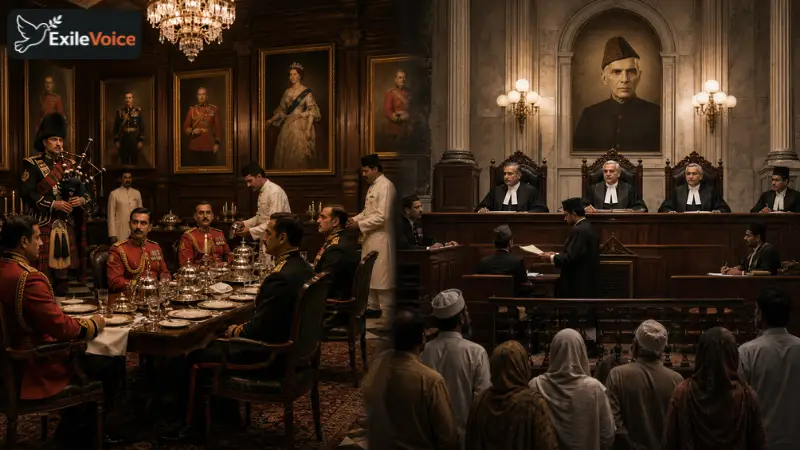
The visual landscape of Pakistan’s elite institutions serves as a living museum of British colonial rule. A recently viral video showcasing an Army Cavalry dinner has reignited a critical debate regarding the "High Power Distance" culture that persists within the nation's most powerful corridors. The footage reveals a setting adorned with portraits of the late Queen Elizabeth II, officers in regimental attire that mirrors the British Royal Army, and the haunting melodies of Scottish bagpipes echoing in confined spaces.
This is not merely a matter of aesthetic preference; it is a profound sociological statement. Geert Hofstede’s cultural dimensions theory highlights "Power Distance" as the extent to which less powerful members of organizations accept and expect that power is distributed unequally. In Pakistan, this distance is not just maintained, it is celebrated through optics. From the specific ways officers are served their meals to the rigid protocols of the mess hall, these traditions reinforce a hierarchy where the "ruler" and the "ruled" are visually and behaviorally distinct.
The judiciary is not exempt from this colonial hangover. In the Supreme Court, despite the presence of portraits of the Quaid-e-Azam in traditional Sherwani, the operational culture remains deeply European. The ceremonial rituals, such as court assistants (khidmatgars) physically positioning chairs for judges or helping them into their robes, suggest a level of dependency that borders on the monarchical. Paradoxically, while the judges adopt British-style legal attire, the assistants are often dressed in the Sherwani and Jinnah Cap, the very attire of the nation’s founding father, yet they occupy the lowest rung of the court’s social hierarchy, often sitting on the floor at the feet of the bench.
This cultural framework creates a psychological barrier between the state and its citizens. When a CSP officer, regardless of their humble origins, enters this system, they are swiftly assimilated into the "Brown Sahib" archetype. They begin to view the public not as constituents to be served, but as subjects to be managed. This systemic "re-engineering" of the individual ensures that the organizational culture remains impenetrable to reform. To move forward, Pakistan must evaluate whether these imported traditions serve the modern republic or if they continue to facilitate a "Master-Slave" dynamic that stifles democratic evolution.