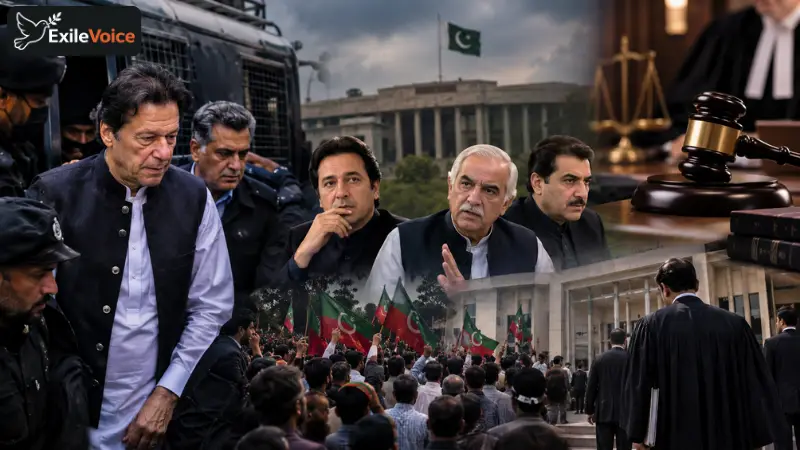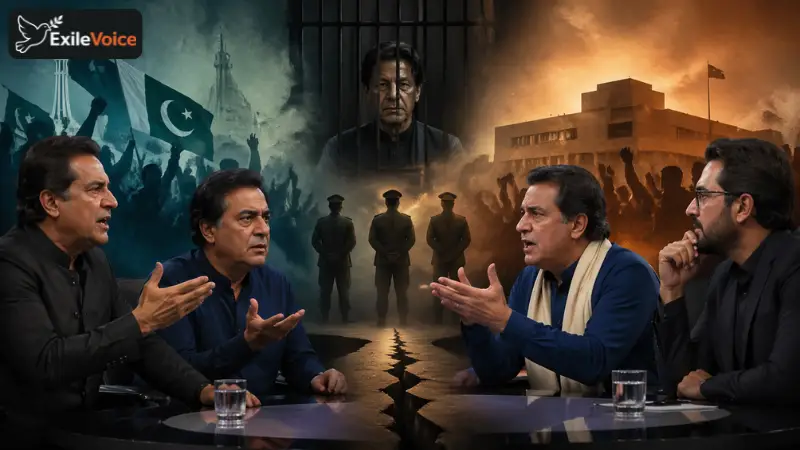
The intersection of the arts and politics in Pakistan has always been a delicate space, but a recent televised exchange during an Eid special has highlighted a deepening chasm. The debate involving veteran actors Sohail Ahmad and Waseem Abbas against the backdrop of Imran Khan’s incarceration has moved beyond mere entertainment, becoming a case study in how cultural icons navigate the country's turbulent political waters.
The controversy began when Sohail Ahmad, a legend of the Pakistani stage and screen, reacted sharply to actress Naeema Butt’s suggestion that Imran Khan should be released from prison. Ahmad’s rebuttal, which referenced the fate of previous leaders like Zulfikar Ali Bhutto and Asif Ali Zardari, suggested that such sensitive political matters should not be discussed in public forums. This stance, often interpreted as an endorsement of the "status quo" or a deference to the "powers that be", has sparked intense backlash from younger generations and political activists who view silence as complicity.
Adding fuel to the fire, veteran actor Waseem Abbas entered the fray, defending Ahmad and leveling criticisms at those residing abroad who comment on Pakistan's internal affairs. Abbas’s rhetoric highlighted a common trope in Pakistani discourse: the distinction between those who "suffer" the consequences of their speech on the ground and those who speak from the safety of the diaspora. However, his comments also touched on a darker reality of Pakistani politics, the "loose ball" theory. Abbas suggested that politicians often provide agencies with incriminating evidence through their own actions, which then allows for their control or removal.
This perspective is significant because it shifts the blame of political instability from institutional intervention to individual character flaws. Critics argue that this narrative ignores the systemic pressures and "engineered" environments that leaders must navigate. The exchange serves as a microcosm of the national struggle: on one side, a traditional guard that believes in quietism and the inevitability of institutional dominance; on the other, a vocal movement demanding transparency, human rights, and the rule of law regardless of past precedents.
As these cultural titans clash with political analysts like Shahbaz Gill, the underlying issue remains the "elephant in the room", the role of the military establishment. By focusing on the "ill-mannered" nature of political supporters or the "intellectual failures" of advisors, the discourse often avoids addressing the structural reforms needed to ensure that no leader, whether Bhutto, Nawaz Sharif, or Imran Khan, faces extra-constitutional hurdles.