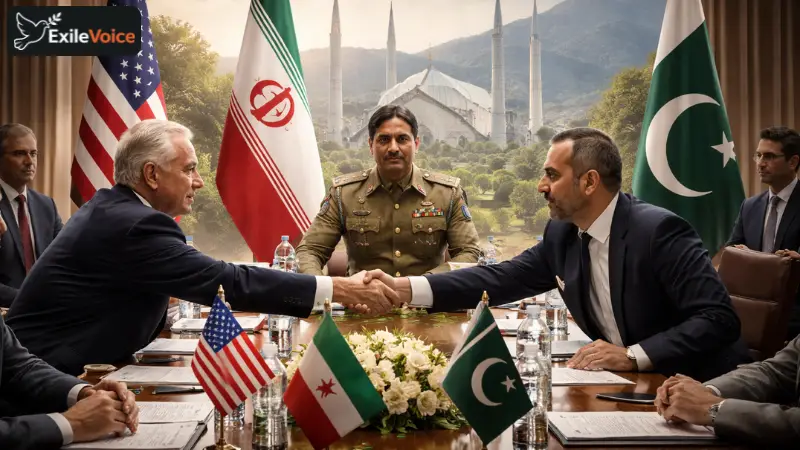
The international diplomatic community was struck by President Donald Trump’s recent decision to reject his White House team’s recommendation to move the second round of U.S.-Iran talks to Geneva. Instead, Trump insisted that the negotiations continue in Pakistan. This move is not merely a logistical choice but a significant geopolitical signal that underscores the rising importance of Pakistan as a regional stabilizer and a "serious mediator" in the Middle East.
This decision reflects a high degree of trust in the current Pakistani leadership, particularly within the military establishment. By hosting these high-stakes talks, Pakistan is cementing its role as a facilitator between two historically antagonistic powers. This "special relationship" between the Trump administration and the Pakistani military, specifically General Asim Munir, suggests a pragmatic alignment of interests. For Washington, Pakistan provides a convenient portal for communication with Tehran, leveraging its proximity and historical ties with the Iranian regime.
However, the nature of this mediation is multifaceted. While it elevates Pakistan’s global standing, it also raises questions about the motivations of the parties involved. President Trump, who prides himself on being a master "deal-maker," appears to be using the Islamabad venue to maintain maximum pressure on Iran while keeping the door open for a nuclear agreement. The discrepancy between the 20-year enrichment moratorium proposed by Vice President J.D. Vance and Iran’s five-year counter-offer suggests that the path to a final deal remains fraught with complexity. Pakistan’s role is to bridge this gap, ensuring that both sides remain engaged despite the significant hurdles regarding nuclear enrichment and the release of frozen funds.