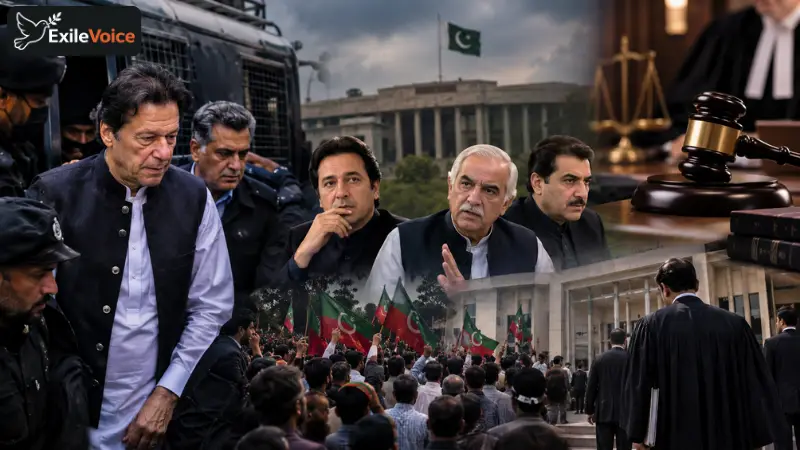
In May 2026, Pakistan finds itself at a familiar yet intensified crossroads, where the narrative of the "Garrison State" continues to overshadow civil discourse and democratic stability. The anniversary of the May 9, 2023, incidents serves as a grim reminder of the fractured relationship between the country’s most popular political entity, the Pakistan Tehreek-e-Insaf (PTI), and the military establishment.
The events of 2023, which the official narrative describes as a conspiracy against state institutions, resulted in a systematic fragmentation of the PTI. Despite this, the party demonstrated its resilience by securing a significant victory in the February 2024 elections, highlighting a profound disconnect between the state's punitive measures and public sentiment. The government’s response, involving mass arrests and the reported dismantling of judicial and media independence, has created a climate where political survival is inextricably linked to one's relationship with the military headquarters (GHQ).
A critical analysis of the current landscape reveals that "National Security" remains the sole unifying theme of the Pakistani state, often at the expense of human security. While regional neighbors like India focus on leveraging their massive human resource and economic scale, Pakistan’s internal focus remains locked on the events of May 9. The military establishment has used these events to solidify its political legitimacy, presenting itself as the ultimate defender of the state against internal "conspiracies."
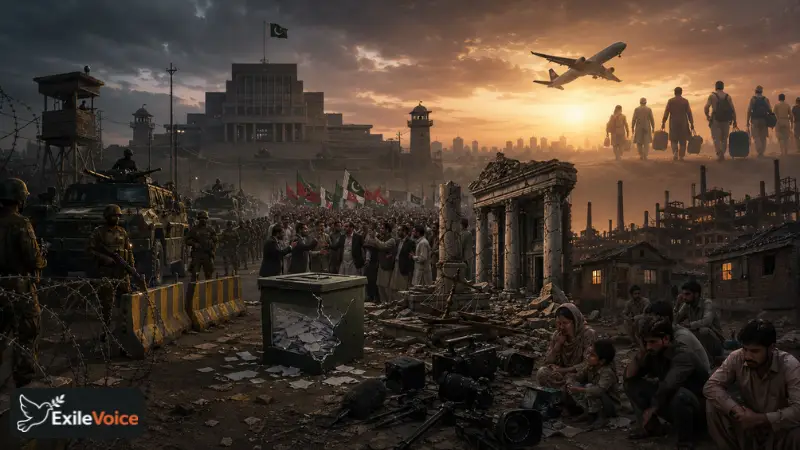
However, this focus on the "Garrison" model comes with significant costs. Reports of mass deportations of Pakistani workers from the UAE, specifically targeting those of certain sectarian backgrounds, and the issuance of thousands of emergency travel documents suggest that Pakistan’s external standing is being affected by its internal instability. While the Ministry of Interior denies country-specific or sect-specific targeting, international news outlets have documented cases of detention and forced deportation that contradict official claims.
The obsession with traditional security also ignores the evolving definition of national stability. In 2019, military leadership briefly proposed a shift toward "human security," encompassing food, water, and educational security. By 2026, that vision seems to have been abandoned in favor of a hybrid regime model that prioritizes the suppression of political dissent over industrial productivity or social welfare. As the military conducts exercises in Peshawar involving symbolic victories over foreign flags, the reality of failing to protect foreign consulates and the lack of meaningful job creation for millions of youth remains the true security threat to the nation.