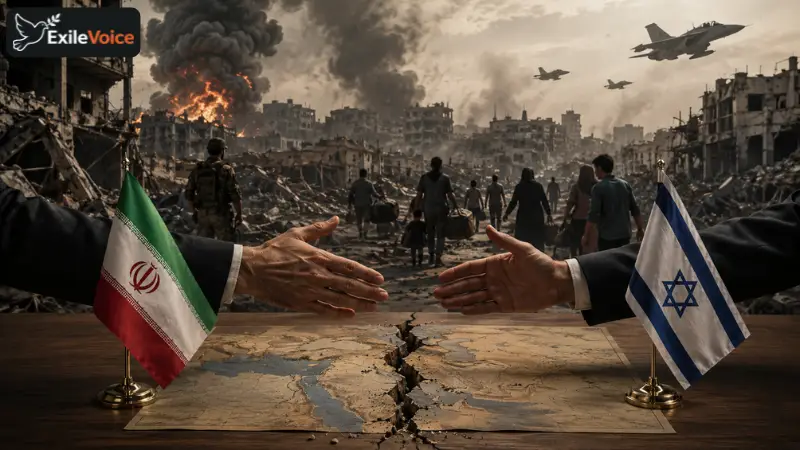
The landscape of Middle Eastern diplomacy has shifted dramatically following the sudden suspension of talks between Iran and Israel, a development that has sent shockwaves through international diplomatic circles. The Iranian authorities, through official channels, announced the immediate suspension of ongoing negotiations, citing the intensifying Israeli military operations in Lebanon as the primary trigger.
For months, global powers and regional stakeholders had invested significant political capital in maintaining a tenuous ceasefire across multiple fronts. This ceasefire, which had paradoxically lasted longer than the active conflict itself, was seen as a rare glimmer of hope in a volatile region. However, the escalation in Beirut and the mass displacement of Lebanese civilians, documented by distressing imagery emerging from the ground, have rendered previous diplomatic efforts obsolete.
The Iranian Foreign Minister, Abbas Araghchi, issued a pointed message shortly after the collapse, asserting that any ceasefire agreement is inherently tied to all fronts, including the volatile Lebanese theater. The Iranian position emphasizes that violations of the ceasefire in one region constitute a broader breach of international understanding, directly implicating U.S. and Israeli policy in the escalating humanitarian crisis.
This suspension marks a critical inflection point. As military activity deepens, observers are noting the significance of the depth of the current Israeli incursion, which military analysts describe as the most significant since the inception of the Lebanon conflict decades ago. The evacuation orders issued to suburban Beirut populations signal a move toward more destructive phases of the campaign, forcing hundreds of thousands to flee their homes.
Pakistan, sensing the gravity of the situation, has rapidly engaged in intensive "phone diplomacy." High-level communication between Pakistan’s Foreign Minister Ishaq Dar and his Iranian counterpart, alongside direct dialogue between Chief of Army Staff General Asim Munir and international stakeholders, highlights Islamabad’s attempt to mitigate the fallout. As this story continues to develop, the focus remains on whether these diplomatic channels can prevent a total regional conflagration or if the current momentum toward confrontation is irreversible. The international community now watches closely as the precarious balance of power in the Middle East is tested once more.