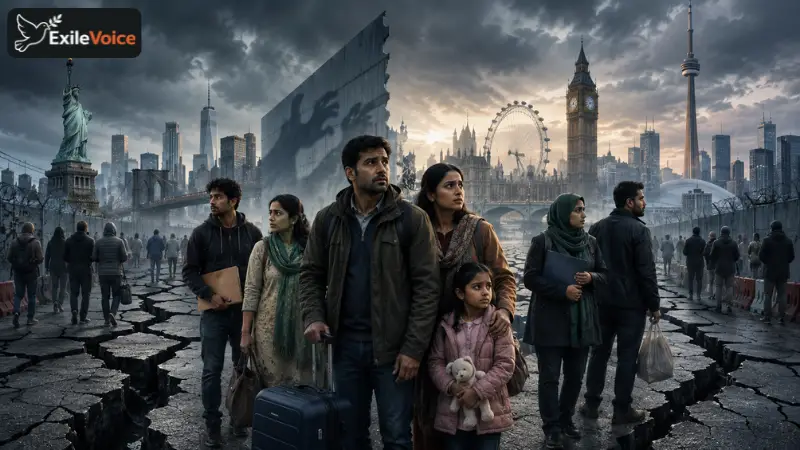
The political climate across the North Atlantic, spanning the United Kingdom, Canada, and the United States, is undergoing a seismic shift that presents unprecedented challenges for immigrant communities from South Asia. A rising tide of anti-immigration sentiment, fueled by economic anxieties and populist rhetoric, is fundamentally altering the legal and social security previously enjoyed by the diaspora. For Pakistani, Indian, and Bangladeshi communities, the assumption that citizenship or residency status is an immutable shield is being tested by new political realities.
In the United States, the discourse surrounding "de-naturalization" has moved from the fringes of political theory into the realm of administrative possibility. While native-born citizenship remains secure, acquired citizenship and permanent residency (Green Cards) are increasingly viewed by certain political factions as privileges that can be scrutinized or revoked under specific legal pretexts. The use of fear as a tool of deterrence has already seen a sharp decline in new immigration applications, as the perceived "American Dream" becomes marred by the threat of administrative hostility.
Similarly, in the United Kingdom, recent local elections have highlighted the growing influence of right-wing parties whose central platform is the curtailment of immigration and the reduction of benefits for non-native residents. The political discourse is increasingly framing "colored nations" as a burden on the native population's economic growth. This shift suggests that legal structures are only as strong as the political will behind them; when the politics change, the courts and the legal protections they provide often follow suit.
A critical analysis of these diaspora communities reveals a significant hurdle to their security: a lack of deep social and cultural integration. Despite decades of residency, many immigrant families maintain a "cultural garrison," limiting their social interactions to their own ethnic circles. This lack of emotional and psychological bonding with the native population means that when political tides turn, these communities lack the local allies necessary to defend their rights. Integration does not require the abandonment of one's heritage, but it does require active participation in the local political and social life of the host nation.