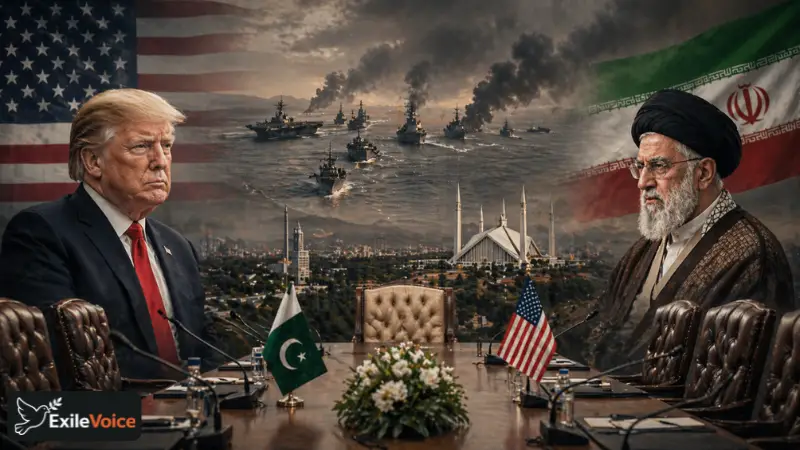
The highly anticipated second round of peace talks in Islamabad has met a significant roadblock as reports confirm that the Iranian government has officially declined to participate. This development comes at a critical juncture for U.S. President Donald Trump, who has been aggressively pushing for a diplomatic breakthrough with Tehran through Pakistani mediation. The refusal of Iran to join the summit in Islamabad signals a collapse of the current diplomatic track and raises serious questions about the feasibility of a peaceful resolution under current conditions.
Tehran’s stated reason for withdrawing from the talks is centered on what it perceives as "diplomacy under coercion." Iranian officials have pointed to the ongoing naval blockade in the Persian Gulf, which continues to target their commercial shipping, as a primary reason for their refusal. From the Iranian perspective, the spirit of the ceasefire agreement, initially accepted 15 days ago following a request from Pakistan, has been systematically violated by the United States and Israel. Tehran maintains that it cannot engage in negotiations while under the direct threat of economic blackmail and military pressure.
The geopolitical consequences of this stalled diplomacy are immense. Expert analysis from figures like Professor John Mearsheimer suggests that the global economy is "hitting the iceberg." This is not merely a localized conflict over oil and gas; the disruption in the Persian Gulf affects the global supply of fertilizers, aluminum, and helium gas essential for semiconductor manufacturing. Furthermore, European airlines are reportedly facing a severe jet fuel crisis, with reserves estimated to last only two more weeks if the blockade continues.
The refusal of the Iranian delegation to travel to Islamabad also places the Pakistani government in a difficult position. Islamabad had prepared extensively for the summit, converting the capital into a virtual fortress with over 20,000 security personnel to protect the anticipated arrival of U.S. Vice President JD Vance and the Iranian delegation. With the talks now in jeopardy, the role of Pakistan as a neutral mediator is being tested, as it appears the initiative was primarily a U.S.-led effort to extricate itself from a deepening conflict rather than a locally driven peace process.
As the deadline for the current ceasefire approaches, the lack of a diplomatic venue suggests that the region may be heading toward a renewed phase of active hostilities. Without solid guarantees of non-aggression and a lifting of sanctions, Iran appears unwilling to provide the diplomatic victory that the Trump administration so desperately seeks.