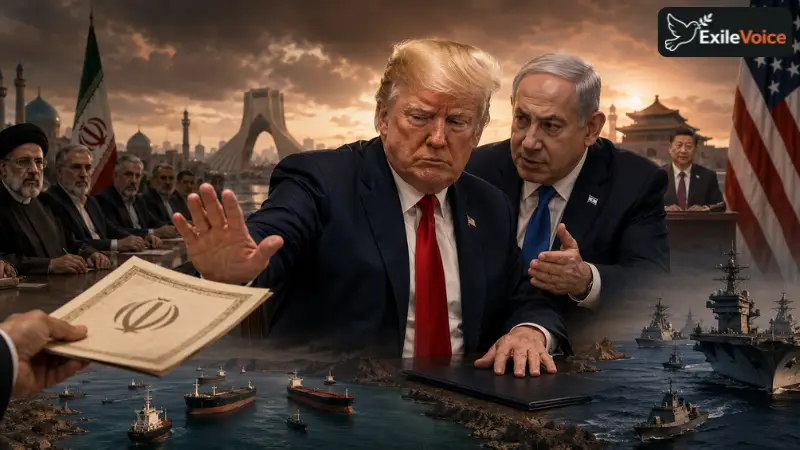
In a significant escalation of Middle Eastern tensions, President Donald Trump has officially rejected a counter-proposal from Iran, just as the international community anticipated a potential diplomatic breakthrough. The proposal, mediated notably through Pakistani channels, was meant to address the long-standing nuclear standoff and the ongoing naval blockades in the Strait of Hormuz. However, Trump’s swift dismissal of the terms as "unacceptable" has plunged the region back into a state of strategic limbo.
The core of the disagreement appears to center on the timeline of nuclear enrichment and the immediate lifting of economic sanctions. While the exact text remains classified, reports suggest that Iran demanded an immediate end to the naval blockade and the right to sell oil without restriction during a proposed 30-day negotiation window. From the American perspective, the demands for war reparations and an immediate lifting of sanctions before verifiable nuclear rollbacks were non-starters for the Trump administration.
Furthermore, the influence of Israeli Prime Minister Benjamin Netanyahu cannot be overstated. Documents and recent phone records indicate that Trump consulted with Netanyahu shortly before announcing the rejection. The Israeli leadership maintains that any deal providing economic relief to Iran without dismantling its indigenous missile and drone infrastructure is a strategic failure. For Israel, the conflict is not merely about nuclear enrichment, which they argue can be reconstituted, but about the total degradation of Iran’s regional influence and military industrial base.
As the US and Iran remain at an impasse, the focus shifts toward the upcoming "Emperor Xi" summit in China. With the global economy suffering from energy price spikes and semiconductor shortages linked to the Strait of Hormuz blockade, the pressure for a Chinese-mediated solution is mounting. Trump’s rejection may be a tactical maneuver to enter the Beijing talks from a position of perceived strength, but it leaves the Middle East on a knife-edge.