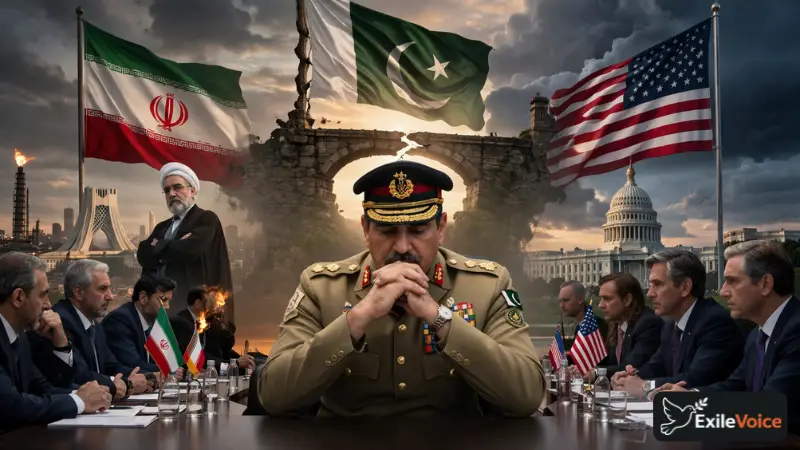
In a significant blow to regional diplomacy, Pakistan’s recent attempts to mediate between Iran and the United States have reportedly ended in failure. At the center of this diplomatic push was General Asim Munir, whose efforts were high-profile but ultimately unsuccessful in securing a peace agreement or even a temporary ceasefire. Despite intensive "all-night" discussions involving high-level Iranian representatives, Tehran has formally rejected the peace proposals facilitated by Islamabad.
The failure of this "Marshal's Diplomacy" highlights the deep-seated complexities of the Middle Eastern conflict. Iranian state media, IRNA, signaled that while they acknowledged the mediation efforts, the conditions offered were insufficient. Specifically, Iran is seeking permanent solutions, the complete lifting of sanctions, formal reparations, and guaranteed safe passage, rather than the temporary 45-day ceasefire currently being floated by Western powers. Tehran’s stance is clear: "Thanks, but no thanks." They believe that short-term deals primarily benefit secondary players like Pakistan, Turkey, and Qatar, rather than addressing the core Iranian grievances.
Domestically, the failure of General Munir’s diplomatic mission has sparked a wave of criticism. Prior to the formal rejection, certain segments of the Pakistani media and establishment consultants had been premature in their praise, with some even suggesting that the General deserved a Nobel Peace Prize for his role. This premature celebration has now turned into a sobering realization that the "Islamabad Accord" was more aspirational than realistic.
The collapse of these talks leaves Pakistan in a precarious position. As a neighboring country, the stability of the Iran-US relationship directly impacts Pakistan's security and economy. The failure to deliver a breakthrough suggests that regional influence is shifting, and the traditional role of Pakistan as a "bridge" between the West and the Islamic Republic is being tested. Without a permanent ceasefire, the risk of the conflict spilling over into Pakistani territory, whether through economic disruption or actual physical radiation hazards from potential strikes, remains a terrifying possibility.