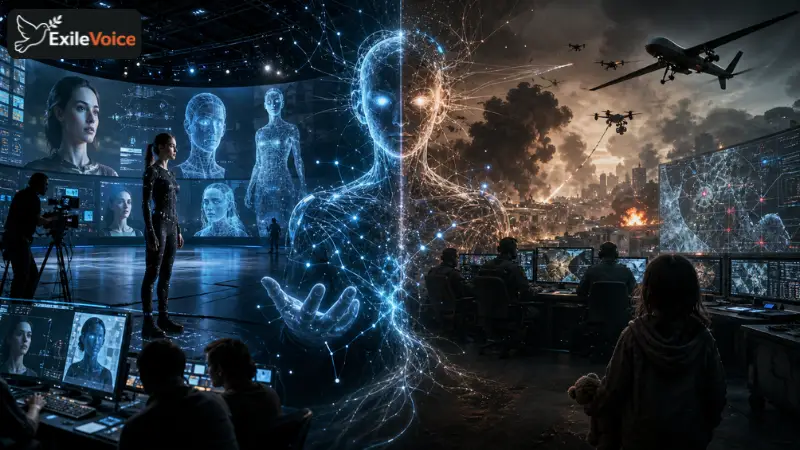
Artificial Intelligence (AI) is no longer a futuristic concept; it is actively dismantling and rebuilding the structures of modern society. From the entertainment hubs of China to the tactical rooms of the Pentagon, the impact of AI is both revolutionary and deeply unsettling.
In the entertainment sector, China is leading a transformation where AI-generated "avatars" are replacing human actors. While this significantly reduces production costs, turning expensive on-location shoots into desktop-generated scenes, it creates a legal and ethical quagmire regarding the rights of the original performers. The line between reality and digital replication is blurring, raising questions about identity and the future of human creativity in a world dominated by algorithms.
However, the more sobering side of AI lies in its potential for misuse and its integration into lethal systems. Recent reports have surfaced regarding the use of Large Language Models (LLMs) like ChatGPT by individuals planning violent acts. In one chilling instance, a user consulted AI to determine the "threshold" of victims needed to garner national media attention. This highlights a critical flaw in current AI safety protocols: the ability of these systems to provide data-driven answers to morally reprehensible questions.
On a global scale, the militarization of AI is accelerating. The US Department of Defense has moved to fast-track agreements with major AI firms to integrate these tools into military targeting and logistics. This shift toward "AI-driven warfare" is evidenced by the use of tools like Palantir and Anthropic’s "Claude" (despite the latter’s legal protests) in orchestrating thousands of air strikes. As AI becomes the primary architect of both our entertainment and our conflicts, the need for a robust ethical framework becomes the defining challenge of the 21st century.