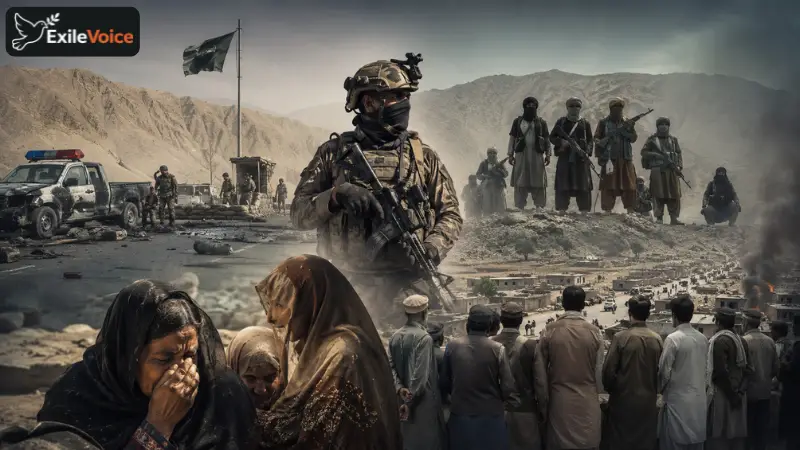
The security landscape in Balochistan has reached a perilous juncture, characterized by a significant erosion of state authority and a marked increase in the boldness of militant factions. Recent reports indicate that militant groups are no longer merely targeting security agencies but are expanding their operations to encompass anyone perceived to be cooperating with the state. This shift in strategy, from direct engagement with security forces to broader intimidation of civilian and institutional supporters, signals a dangerous evolution in the regional threat profile.
Recent incidents, including a major assault on a police checkpoint near the Mangi Dam, highlight severe operational vulnerabilities. The attack, involving a large, well-armed group, resulted in a prolonged confrontation where security personnel were left without reinforcements for hours, ultimately leading to significant casualties among the police force. Such events raise urgent questions regarding the efficacy of the state's security apparatus, intelligence-sharing, and rapid response capabilities. The inability to provide timely support or protect regional figures suggests a systemic weakness that militants are effectively exploiting.
Furthermore, the public's loss of confidence in the state's ability to provide basic security is palpable. When victims' families express a desire to distance themselves from state-affiliated institutions, it underscores a catastrophic breakdown in the social contract. Addressing this crisis requires more than reactive counter-insurgency operations; it necessitates a comprehensive policy shift that prioritizes the protection of human life and restores the credibility of the state as a reliable provider of law and order. The continued reliance on conventional military narratives without addressing the underlying causes of instability risks further alienating the local population and deepening the current vacuum of power.